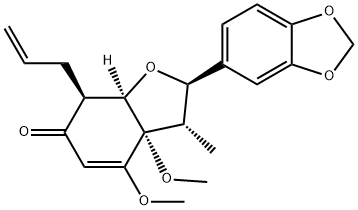
Fargesone A (3 and 30 mg/kg; i.p.; daily for 7 days) significantly ameliorates pathological features in bile duct ligation (BDL)-induced chronic liver fibrosis mouse model[1].
Pharmacokinetics parameters of Fargesone A in mice
| t1/2 (h) | Tmax (h) | Cmax (ng/mL) | AUC0-t (ng/mL*h) | AUC0-inf (ng/mL*h) | MRT0-inf (h) | F (%) |
| i.v. (5 mpk) | 0.68±0.1 | - | 941±57 | 469±13 | 471±14 | 0.43±0.13 | - |
| p.o. (10 mpk) | 0.33±0.04 | 0.25±0.00 | 104±16 | 101±32 | 102±32 | 0.58±0.07 | 10.8±3.2 |
| Animal Model: | C57BL/6 mice, bile duct ligation (BDL)-induced chronic liver fibrosis mouse model[1] |
| Dosage: | 3 and 30 mg/kg |
| Administration: | IP, once daily for 7 days |
| Result: | Resulted in a lower level of inflammatory infiltrates and a smaller amount of collagen deposition compared to the vehicle group. Reversed BDL-induced sharp increase in total bilirubin level in the serum. Significantly decreased liver mRNA expression of the inflammatory biomarkers interleukin (IL)-6, IL-1β, inducible nitric oxide synthase (iNOS), and prostaglandin-endoperoxide synthase 2 (COX2). |
| Animal Model: | C57BL6/J mice[1] |
| Dosage: | 5 or 10 mg/kg |
| Administration: | IV or PO (Pharmacokinetics Analysis) |
| Result: | Showed acceptable PK profiles in general. |