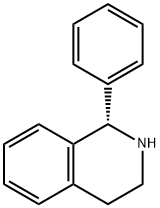
To a solution of 1726 mg (11.5 mmol, 1 equivalent) of L-tartaric acid and 10 mL of methanol, 10 mL of a methanol solution containing 2750 mg (chemical purity 87.4% by mass, 11.5 mmol) of racemic 1-phenyl-1,2,3,4-tetrahydroisoquinoline (racemic raw material) was added dropwise. The solution was cooled to 5 °C, and crystals precipitated. The mixture was stirred for 1 hour, and then filtered under reduced pressure to remove the precipitated crystals of the (R)-1-phenyl-1,2,3,4-tetrahydroisoquinoline/L-tartaric acid salt (R-type tartrate crystals). The optical purity of the (1S)-1-Phenyl-1,2,3,4-tetrahydroisoquinoline S-type raw material in the resulting mother liquor was determined to be 83% ee. 20 mL of water was added, and methanol was removed by reduced pressure distillation. A 30% by mass sodium hydroxide aqueous solution was added to the resulting solution (19.65 g) until the pH reached 12, and crystals precipitated. Cool to 5°C, stir for 30 minutes, then filter the crystals under reduced pressure, wash with 20 mL of water, and dry under vacuum to obtain white crystals of (1S)-1-Phenyl-1,2,3,4-tetrahydroisoquinoline (S-type raw material) (1092 mg, chemical purity 93% by mass, 4.83 mmol, yield 42 mol%, optical purity 82% ee).
(1S)-1-Phenyl-1,2,3,4-tetrahydroisoquinoline has been used as a lead compound for the development of drugs with dopamine β-hydroxylase inhibitory activity. In vitro studies have shown that 1-phenyl-1,2,3,4-tetrahydro-isoquinoline inhibits human serum dopamine β-hydroxylase and can be used to study the possible role of this enzyme in Parkinson's disease.