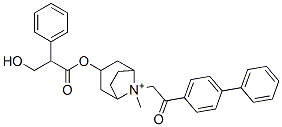
Fentonium bromide is an anti-ulcerogenic, anticholinergic and antispasmodic agent. Fentonium bromide can be used in the research of neurological conditions[1][2][3].
5.50g (0.02 mol) of p-phenylphenacyl bromide were dissolved in 56 cc of
anhydrous acetone previously heated to about 40°C. This solution was added,
with stirring, to a solution of 5.70 g (0.02 mol) of 1-hyoscyamine in 43 cc of
anhydrous acetone; the reaction solution was maintained at 45°C and stirred
for about six hours.
After standing overnight in the refrigerator, the precipitate was collected by
filtration and dried in vacuo at 60°C. Yield: 10.2 g; MP = 193°C to 194°C.
Anticholinergic, Spasmolytic
Fentonium bromide (1 mg/kg, i.v.) is an effective antagonist of gastric secretion in rats[1].
Fentonium bromide (phentonium, 1 mg/kg, i.p.) prevents stress ulcers in rats[1].
| Animal Model: | Bethanechol-, pentagastrin-, and caerulein-induced gastric secretion in rats[1] |
| Dosage: | 1 mg/kg |
| Administration: | Intravenous injection (i.v.) |
| Result: | Inhibited gastric acid secretion. |
| Animal Model: | Rats[2] |
| Dosage: | 1 mg/kg |
| Administration: | Intraperitoneal injection (i.p.) |
| Result: | Decreased both the number of pre-ulceral lesions and the number of gastroduodenal ulcers in comparison with untreated controls. |
[1] M Impicciatore, et al. Inhibitory effect of fentonium on gastric acid secretion in different laboratory animals. Farmaco Sci. 1977 Jul;32(7):482-9. PMID:19285
[2] Jacob Elimar, et al. Action of phentonium in the prevention of stress ulcers in rats. Revista Brasileira de Clinica e Terapeutica (1975), 4(7), 295-300.