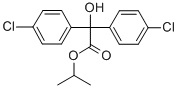
Chloropropylate is an obsolete insecticide. It has a low aqueous solubility and is not highly volatile. It has a low mammalian and fish ecotoxicity. Whilst it is considered to be a skin and eye irritant there is no data to suggest it would cause significant health implications unless doses are high.
Chloropropylate is a dichlorobenzylic acid derivative and a related compound of DDT. Chloropropylate is an aracicide used for mite control.
ChEBI: Chloropropylate is an organochlorine acaricide, a member of monochlorobenzenes, a tertiary alcohol and an isopropyl ester. It has a role as a bridged diphenyl acaricide. It is functionally related to a 4,4'-dichlorobenzilic acid.
Chloropropylate was produced commercially through a synthesis involving halogenated aromatic compounds and esterification reactions. The process typically began with the preparation of 4-chlorobenzyl alcohol, which was then reacted with propionic acid or its derivatives under controlled conditions to form the ester compound, chloropropylate (4-chlorobenzyl propionate). This reaction was catalysed by acid or base catalysts and carried out in a solvent medium to ensure high yield and purity.
Specific with contact action. Inhibitor of oxidative phosphorylation. Inhibitor of mitochondrial ATP synthase.