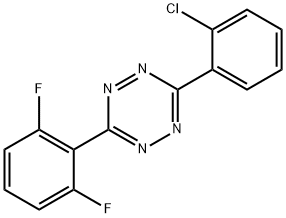
Diflovidazin is a tetrazine selective miticide mainly used in horticulture and viticulture although it is not approved for use in many countries. It has a low aqueous solubility and a low volatility. Under some conditions it may be persistent in soil and water systems. There are significant data gaps regarding human health but oral toxicity is moderate. Data related to the toxicity of diflovidazin to biodiversity is limited but it is known to be moderately toxic to birds, bees and aquatic invertebrates.
Diflovidazin is a selective acaricide. Pesticide.
Diflovidazin is commercially produced through a multi-step synthesis involving halogenated aromatic precursors. The process begins with the preparation of 2-chlorobenzonitrile and 2,6-difluorobenzonitrile, which are reacted under controlled conditions to form the tetrazine ring system central to diflovidazin’s structure. This cyclisation typically involves reagents such as hydrazine or its derivatives in an organic solvent, with temperature and pH carefully regulated to ensure efficient ring closure and high yield.
Contact, ovicide, selective with translaminar activity. Mite growth inhibitor affecting CHS1.