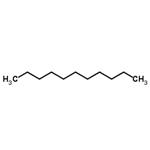
Undecane, as an alternative to silicone, is a skin-safe emollient that is often used in conjunction with tridecane in formulations for skincare and make-up products, with an addition level ranging from 2% to 10%. This ingredient helps to improve spreadability and reduce the greasy feel on the skin. It contributes to a smoother, fresher finish and helps to prolong the wear of the make-up.
n-Hendecane, also known as Undecane and Hendecane, is a component of petrol. It is used as a solvent and degreaser for inks as well as in organic synthesis. Due to its low phase transition temperature (-26 °C), it is also used as a core material for microcapsules in cold chain transport.
Undecane is used in preparation method of small-size hollow Silicon Dioxide.
Petroleum research, organic synthesis, distillation
chaser.
Undecane is mainly used as a model n-alkane in studies relating to viscosities, excess molar enthalpies and vapor-liquid equilibrium of binary alkane mixtures.
Undecane is obtained from the refining of petroleum.
Paraffins are isolated by selective adsorption followed
by fractional distillation to produce the desired mix of nparaffins
(63).
ChEBI: Undecane is a straight-chain alkane with 11 carbon atoms.
Undecane is a natural compound with anti-allergic and anti-inflammatory properties that may help prevent or treat inflammatory skin conditions such as atopic dermatitis, as well as other allergic diseases [1]. Studies have shown that it increases cAMP levels in mast cells and keratinocytes. In sensitised mast cells, undecane inhibits degranulation and the secretion of histamine and tumour necrosis factor-α (TNF-α). Furthermore, in sensitised keratinocytes, undecane reversed the elevated levels of p38 phosphorylation, nuclear factor κB (NF-κB) transcriptional activity, and target cytokine/chemokine genes, including thymic and activation-regulated chemokine (TARC), macrophage-derived chemokine (MDC) and interleukin-8 (IL-8).
Journal of the American Chemical Society, 95, p. 6131, 1973
DOI: 10.1021/ja00799a058The Journal of Organic Chemistry, 50, p. 3082, 1985
A colorless liquid. Insoluble in water and less dense than water. Flash point 130°F. Used to make other chemicals.
Flammable. Insoluble in water.
Saturated aliphatic hydrocarbons, such as n-Hendecane, may be incompatible with strong oxidizing agents like nitric acid. Charring of the hydrocarbon may occur followed by ignition of unreacted hydrocarbon and other nearby combustibles. In other settings, aliphatic saturated hydrocarbons are mostly unreactive. They are not affected by aqueous solutions of acids, alkalis, most oxidizing agents, and most reducing agents.
Inhalation or contact with material may irritate or burn skin and eyes. Fire may produce irritating, corrosive and/or toxic gases. Vapors may cause dizziness or suffocation. Runoff from fire control or dilution water may cause pollution.
Moderately toxic by
intravenous route. Flammable liquid when
exposed to heat, sparks, flame, or oxidizers.To fight fire, use foam, mist, dry chemical.
Emitted from modern buildmg materials
(CENEAR 69,22,91). When heated to
decomposition it emits acrid smoke and
irritating fumes. See also ALKANES.
Undecane (25 mg) and benzo[a]
pyrene (B[a]P) (5 mg) were applied to the skin of female ICR/
Ha Swiss mice for 3/week for 440 days, inducing papillomas
in 41 of 50 animals. B[a]P alone induced tumors in 12 of 50
animals in the same time, while undecane alone did not
produce tumors.
[1] Dabin Choi, Taesun P., Wesuk Kang. (2020). Anti-Allergic and Anti-Inflammatory Effects of Undecane on Mast Cells and Keratinocytes. Molecules, 25 7. https://doi.org/
10.3390/molecules25071554