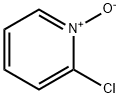
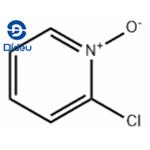
There are many methods for synthesizing 2-chloropyridine-N-oxides, such as the hydrogen peroxide oxidation method, the peroxyacetic acid oxidation method, and the sodium perborate oxidation method. This experiment used tungstic acid and sulfuric acid as catalysts and hydrogen peroxide as an oxidant. Comparative experiments were conducted on the amounts of catalyst and oxidant, reaction temperature, and reaction time to explore the optimal reaction conditions and provide basic data for the synthesis of 2-chloropyridine N-oxides.
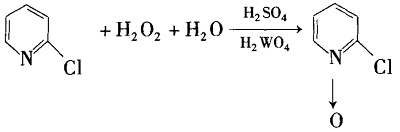
In a 250mL four-necked flask equipped with an electric stirrer, thermometer, spherical condenser, and constant-pressure dropping funnel, add 25mL of 2-chloropyridine, 28mL of distilled water, 1.1mL of 98% concentrated sulfuric acid, and 2.2g of tungstic acid. Start the stirrer, and then measure 30mL of hydrogen peroxide into the constant-pressure dropping funnel. Adjust the water bath temperature. When the reaction solution temperature reaches 70℃, start adding hydrogen peroxide dropwise, controlling the temperature at 70-80℃. The addition is completed in about 12 hours. Then, continue stirring at 75-80℃ and keep warm for 24 hours. Take samples every 3 hours, for a total of 8 samples.
After the reaction, the solution turned into a pale yellow transparent solution. After cooling to room temperature, the sample was analyzed by gas chromatography, and the conversion rate was calculated. 2.5 g of CaO was added to a small beaker, followed by distilled water to prepare a Ca(OH)₂ emulsion. The pH of the reaction solution was adjusted to 6–7 using this emulsion. The mixture was stirred at room temperature for 1 hour, resulting in the formation of a precipitate, CaWO₄. The precipitate was filtered, washed, and dried. An equimolar amount of dilute hydrochloric acid was added to the filtrate to form a salt. The water was evaporated to dryness using a water pump under reduced pressure to obtain the hydrochloride of nitrogen-oxidized 2-chloropyridine, a pale yellow solid with a melting point of 141–143 °C, consistent with the theoretical value. The yield was calculated based on this.