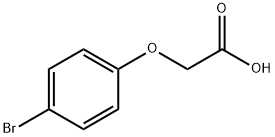
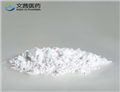
4-Bromophenoxyacetic acid, also known as p-bromophenoxyacetate, is a phenoxyalkanoic acid derivative. It is a chemical elicitor that can induce β-glucuronidase (GUS) activity in rice.
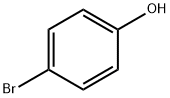
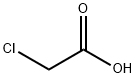
The general procedure for the synthesis of 4-bromophenoxyacetic acid from 4-bromophenol and chloroacetic acid was as follows: a mixture of NaOH (0.04 mol, 1.60 g), deionized water (20 mL), and ethanol (20 mL) was added to a 150 mL three-necked flask, followed by the slow addition of 4-bromophenol (0.04 mol, 6.92 g). After 20 minutes of reaction under stirring, aqueous sodium chloroacetate solution was added dropwise. The reaction mixture was heated to 105 °C and refluxed for 5 hours. After completion of the reaction, it was cooled to room temperature and the pH of the mixture was adjusted to 1-2 with dilute hydrochloric acid. the precipitate was collected by filtration and washed several times with dilute hydrochloric acid. Finally, the product was purified by recrystallization and dried under vacuum to give 4-bromophenoxyacetic acid as a white solid.
Crystallise the acid from EtOH or H2O (m 161.4-161.8o). [Hayes & Branch J Am Chem Soc 65 1555 1943, Beilstein 6 III 747, 6 IV 1052.]
[1] Luminescence, 2018, vol. 33, # 5, p. 855 - 862
[2] Synthetic Communications, 2004, vol. 34, # 3, p. 377 - 382
[3] Journal of Molecular Structure, 2014, vol. 1074, p. 487 - 495
[4] Journal of Fluorescence, 2015, vol. 25, # 4, p. 849 - 859
[5] Luminescence, 2015, vol. 30, # 5, p. 677 - 685