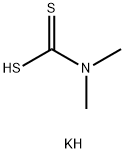
Busan 85 is a useful intermediate that has been used in the synthetic preparation of sulfonamide carbonic anhydrase inhibitors as antitumor agents.
Potassium dimethyldithiocarbamate is produced by reacting dimethylamine, carbon disulfide, and potassium hydroxide in an aqueous or alcoholic medium under controlled, mildly alkaline conditions. In typical industrial practice, carbon disulfide, concentrated potassium hydroxide solution, and dimethylamine solution are introduced into a stirred reactor, where dimethylamine first forms the intermediate dimethylamine–carbon disulfide adduct, which is then neutralised by potassium hydroxide to yield the potassium dithiocarbamate salt. The reaction is exothermic, so temperature is kept low to prevent side reaction.
A concentrated aqueous solution. A green liquid.
Decomposes slowly to generate toxic hydrogen sulfide and dimethylamine.
Potassium dimethyldithiocarbamate solution decomposes slowly to give hydrogen sulfide and dimethylamine. Decomposition is accelerated by acidification. Can generate flammable gases with aldehydes, nitrides, and hydrides. Incompatible with acids, peroxides, and acid halides.
Inhibits the growth of bacteria and fungi through its antimicrobial activity. Prevents bacterial attachment to surfaces, which may be due to its ability to bind covalently with proteins and form a protective layer on metal surfaces