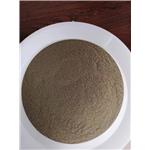
All our SWNTs come packed as dry powders, which can be dispersed within the user's solvent of choice.
Graphite is crystallized carbon and usually
appears as soft, black scales. There are two types of graph ite, natural and artificial (activated). Natural and synthetic
graphite may be mixed with each other or contain other
additives.
Carbon, C, is a nonmetallic element, grey solid. It is found in nature as graphite (specific gravity2.25), diamond(specific gravity 3.51), and coal (specific gravity 1.88). Carbon is found in all living things, is insoluble in common solvents,and forms an almost infinite numberof organic compounds. Anaturally occurring radioactive isotope,14C, has a half-life of 5780 years and is used in archaeo logical investigations to date artifacts and ancient documents. Other uses of carbon depend on its form. For example, diamonds for jewels and abrasives,graphite for lubricants, activated carbon to absorb color and gases, and wood carbon for fuel are some common examples.
All the elements in group 14 have four electrons in their outer valence shell. Carbon exhibitsmore nonmetallic properties than do the others in group 14 and is unique in several ways.It has four forms, called allotropes:
1. Carbon black is the amorphous allotrope (noncrystal form) of carbon. It is produced byheating coal at high temperatures (producing coke); burning natural gas (producing jetblack); or burning vegetable or animal matter (such as wood and bone), at high temperatureswith insufficient oxygen, which prevents complete combustion of the material, thusproducing charcoal.
2. Graphite is a unique crystal structure of carbon wherein layers of carbon atoms are stackedparallel to each other and can extend indefinitely in two dimensions as in the shafts ofcarbon fiber golf clubs. Graphite is also one of the softest elements, making it an excellentdry lubricant.
3. Diamonds are another allotrope whose crystal structure is similar to graphite. Naturaldiamonds were formed under higher pressure and extreme temperatures. Synthetic diamondshave been artificially produced since 1955.
4. Fullerenes are another amorphous (no crystal structure) form of carbon that have the basicformula of C60H60 and are shaped like a soccer ball. (See the “Atomic Structure” sectionof the book for more on fullerenes.)
The different allotropes of carbon were formed under varying conditions in the Earth,starting with different minerals, temperature, pressure, and periods of time. Once the distinctcrystal structures are formed, they are nearly impossible to change.
Carbon-12 is the basis for the average atomic mass units (amu) that is used to determinethe atomic weights of the elements. Carbon is one of the few elements that can form covalentbonds with itself as well as with many metals and nonmetals.
There are 15 isotopes of carbon, two of which are stable. Stable carbon-12makes up 98.89% of the element’s natural abundance in the Earth’s crust, and carbon-13 makes up just 1.11% of carbon’s abundance in the Earth’s crust. All the otherisotopes of carbon are radioactive with half-lives varying from 30 nanoseconds (C-21) to5,730 years (C-14).
Carbon’s name is derived from the Latin word carbo, which means,
“charcoal.”
Carbon is the 14th most abundant element, making up about 0.048% of the Earth’s crust.It is the sixth most abundant element in the universe, which contains 3.5 atoms of carbonfor every atom of silicon. Carbon is a product of the cosmic nuclear process called fusion,through which helium nuclei are “burned” and fused together to form carbon atoms withthe atomic number 12. Only five elements are more abundant in the universe than carbon:hydrogen, helium, oxygen, neon, and nitrogen.
Carbon is, without a doubt, one of the most important elements on Earth. It is the majorelement found in over one million organic compounds and is the minor component in mineralssuch as carbonates of magnesium and calcium (e.g., limestone, marble, and dolomite),coral, and shells of oysters and clams.The carbon cycle, one of the most essential of all biological processes, involves the chemicalconversion of carbon dioxide to carbohydrates in green plants by photosynthesis.
Animalsconsume the carbohydrates and, through the metabolic process, reconvert the carbohydratesback into carbon dioxide, which is returned to the atmosphere to continue the cycle.
Carbon, an element of prehistoric discovery,
is very widely distributed in nature. It is found in abundance
in the sun, stars, comets, and atmospheres of most planets.
Carbon in the form of microscopic diamonds is found in
some meteorites. Natural diamonds are found in kimberlite
or lamporite of ancient formations called “pipes,” such as
found in South Africa, Arkansas, and elsewhere. Diamonds
are now also being recovered from the ocean floor off the
Cape of Good Hope. About 30% of all industrial diamonds
used in the U.S. are now made synthetically. The energy of
the sun and stars can be attributed at least in part to the wellknown
carbon-nitrogen cycle. Carbon is found free in nature
in three allotropic forms: amorphous, graphite, and diamond.
Graphite is one of the softest known materials while diamond
is one of the hardest. Graphite exists in two forms: alpha and
beta. These have identical physical properties, except for their
crystal structure. Naturally occurring graphites are reported
to contain as much as 30% of the rhombohedral (beta) form,
whereas synthetic materials contain only the alpha form. The
hexagonal alpha type can be converted to the beta by mechanical
treatment, and the beta form reverts to the alpha on
heating it above 1000°C. Of recent interest is the discovery
of all-carbon molecules, known as “buckyballs” or fullerenes,
which have a number of unusual properties. These interesting
molecules, consisting of 60 or 70 carbon atoms linked together,
seem capable of withstanding great pressure and trapping
foreign atoms inside their network of carbon. They are said to
be capable of magnetism and superconductivity and have potential
as a nonlinear optical material. Buckyball films are reported
to remain superconductive at temperatures as high as
45 K. In combination, carbon is found as carbon dioxide in the
atmosphere of the Earth and dissolved in all natural waters. It
is a component of great rock masses in the form of carbonates
of calcium (limestone), magnesium, and iron. Coal, petroleum,
and natural gas are chiefly hydrocarbons. Carbon is
unique among the elements in the vast number and variety of
compounds it can form. With hydrogen, oxygen, nitrogen, and
other elements, it forms a very large number of compounds,
carbon atom often being linked to carbon atom. There are
close to ten million known carbon compounds, many thousands
of which are vital to organic and life processes. Without
carbon, the basis for life would be impossible.
Glassy carbon rod is used as an electrode material in electrochemistry. It is also used as high temperature crucibles. Used as a component of some prosthetic devices. Used electrical conductor ion-selective membrane.
There are many uses for the very versatile element carbon. It, no doubt, forms morecompounds than any other element, particularly in the world of modern carbon chemistry.Carbon’s nature allows the formation-rings and straight- and branched-chains types of compoundsthat are capable of adding hydrogen as well as many different types of elemental atomsto these structures. (See figure 5 in the book’s section titled “Atomic Structure” for a depictionof a snake eating its tail as an analogy for the carbon ring of benzene.) In addition, theseringed, straight, and branched carbon molecules can be repeated over and over to form verylarge molecules such as the polymers, proteins, and carbohydrates that are required for life.
Carbon is an excellent reducing agent because it readily combines with oxygen to form COand CO2. Thus, in the form of coke in blast furnaces, it purifies metals by removing the oxidesand other impurities from iron.
Carbon, as graphite, has strong electrical conductivity properties. It is an importantcomponent in electrodes used in a variety of devices, including flashlight cells (batteries).Amorphous carbon has some superconduction capabilities.
Graphite is used for the “lead” in pencils, as a dry lubricant, and as electrodes in arc lamps.Of course, carbon is a popular jewelry item (e.g., diamonds).
Future uses of carbon in the forms of fullerenes (C60 up to C240) and applications of nanotechnologywill provide many new and improved products with unusual properties.
Crucibles, retorts, foundry facings, molds,
lubricants, paints and coatings, boiler compounds,
powder glazing, electrotyping, monochromator in
X-ray diffraction analysis, fluorinated graphite
polymers with fluorine-to-carbon ratios of 0.1–1.25,
electrodes, bricks, chemical equipment, motor and
generator brushes, seal rings, rocket nozzles, moderator
in nuclear reactors, cathodes in electrolytic
cells, pencils, fibers, self-lubricating bearings, intercalation
compounds.
carbon: Symbol C. A nonmetallic element belonging to group 14 (formerly IVB) of the periodic table; a.n. 6; r.a.m. 12.011; m.p. ~3550°C; b.p. ~4827°C. Carbon has three main allotropic forms.
Diamond (r.d. 3.52) occurs naturally and can be produced synthetically. It is extremely hard and has highly refractive crystals. The hardness of diamond results from the covalent crystal structure, in which each carbon atom is linked by covalent bonds to four others situated at the corners of a tetrahedron. The C–C bond length is 0.154 nm and the bond angle is 109.5°.
Graphite (r.d. 2.25) is a soft black slippery substance (sometimes called black lead or plumbago). It occurs naturally and can also be made by the Acheson process. In graphite the carbon atoms are arranged in layers, in which each carbon atom is surrounded by three others to which it is bound by single or double bonds. The layers are held together by much weaker van der Waals’ forces. The carbon–carbon bond length in the layers is 0.142 nm and the layers are 0.34 nm apart. Graphite is a good conductor of heat and electricity. It has a variety of uses including electrical contacts, high-temperature equipment, and as a solid lubricant.
Graphite mixed with clay is the ‘lead’ in pencils (hence its alternative name). The third crystalline allotrope is fullerite. There are also several amorphous forms of carbon, such as carbon black and charcoal. There are two stable isotopes of carbon (proton numbers 12 and 13) and four radioactive ones (10, 11, 14, 15). Carbon–14 is used in carbon dating.
Carbon forms a large number of compounds because of its unique ability to form stable covalent bonds with other carbon atoms and also with hydrogen, oxygen, nitrogen, and sulphur atoms, resulting in the formation of a variety of compounds containing chains and rings of carbon atoms.
A porous form of carbonproduced by the destructive distillationof organic material. Charcoalfrom wood is used as a fuel. All formsof charcoal are porous and are usedfor adsorbing gases and purifyingand clarifying liquids. There are severaltypes depending on the source.Charcoal from coconut shells is a particularlygood gas adsorbent. Animalcharcoal (or bone black) is made byheating bones and dissolving out thecalcium phosphates and other mineralsalts with acid. It is used in sugarrefining. Activated charcoal is charcoalthat has been activated for adsorptionby steaming or by heatingin a vacuum.
The crystalline allotropic form of carbon.
Black grains that have been treated to improve absorptive ability. May heat spontaneously if not properly cooled after manufacture.
Highly flammable. Dust is explosive when exposed to heat or flame. Freshly prepared material can heat and spontaneously ignite in air. The presence of water assists ignition, as do contaminants such as oils. Insoluble in water.
Carbon is incompatible with very strong oxidizing agents such as fluorine, ammonium perchlorate, bromine pentafluoride, bromine trifluoride, chlorine trifluoride, dichlorine oxide, chlorine trifluoride, potassium peroxide, etc. . Also incompatible with air, metals, unsaturated oils. [Lewis].
Many compounds of carbon, particularly the hydrocarbons, are not only toxic but alsocarcinogenic (cancer-causing), but the elemental forms of carbon, such as diamonds andgraphite, are not considered toxic.
Carbon dioxide (CO2) in its pure form will suffocate you by preventing oxygen from enteringyour lungs. Carbon monoxide (CO) is deadly, even in small amounts; once breathed intothe lungs, it replaces the oxygen in the bloodstream.
Carbon dioxide is the fourth most abundant gas in the atmosphere at sea level. Excess CO2produced by industrialized nations is blamed for a slight increase in current temperaturesaround the globe. CO2 makes up only 0.03+ percent by volume of the gases in the atmosphere.However, even a small amount in the upper atmosphere seems to be responsible forsome global warming. Since pre-industrial times, the concentration of CO2 in the Earth’satmosphere has risen by approximately one-third, from 280 ppm (parts per million) to about378 ppm. At the same time methane (CH4) doubled its concentration over the years to about2 ppm in the atmosphere. Methane is many times more effective as a “greenhouse” gas than iscarbon dioxide, even though it breaks down in a shorter period of time. Some Scandinaviancountries have experimented with pumping excess CO2 produced by their industries deeponto the ocean floor where it will reenter the carbon cycle just as it does through trees andvegetation on the surface of the Earth. There are a number of super-computer programsattempting to predict the extent of global warming. The problem is the number of variablesaffecting climate change. The process is akin to trying to determine the shape of a cloud overthe next hour. Unfortunately, neither well-meaning politicians nor scientists can agree onthe extent of potential damage that excess carbon dioxide may do to the Earth in the future.Global warming and cooling are cyclic, which means that these processes have been alternatingover eons of time.
(Powder, natural) Fire risk.
Fire may produce irritating and/or toxic gases. Contact may cause burns to skin and eyes. Contact with molten substance may cause severe burns to skin and eyes. Runoff from fire control may cause pollution.
Flammable/combustible material. May be ignited by friction, heat, sparks or flames. Some may burn rapidly with flare burning effect. Powders, dusts, shavings, borings, turnings or cuttings may explode or burn with explosive violence. Substance may be transported in a molten form at a temperature that may be above its flash point. May re-ignite after fire is extinguished.
Carbon (C) is found in every living being as it forms the
major constituent of living cells. As an essential element
for plants and animals, carbon is derived from
atmospheric carbon dioxide assimilated by plants and
photoautotrophic microbes during photosynthesis.
Carbon occurs in nature both in an elemental form and as
compounds. For example, coal contains elemental
carbon which, upon heating in the absence of air, loses
the volatile substances, and gives coke. Both coal and
coke are amorphous (non-crystalline) forms of carbon.
The two crystalline forms of carbon are diamond and
graphite. These are called the two allotropes of carbon.
Allotropes are two or more forms of an element that exist
in different physical forms, and differ in the bonding or
molecular structure of their fundamental units. Carbon is
found in a combined state in all living organisms, as well
as in fossil fuels such as methane and petroleum. It also
occurs in large amounts in carbonates such as limestone.
Carbon, a non-metallic element, is found at the head
of Group 14 (formerly IV) in the Periodic Table. It is unique in the variety and complexity of
compounds it forms, which is due to the ability of carbon
atoms to bond to one another in long chains, rings and
combinations of rings and chains. Carbon in combination
with H, O, N, S and other elements produces such a
variety of compounds, that a separate branch of
chemistry called organic chemistry, came into being
around carbon compounds.
Elemental carbon is a fairly inert substance. It is
insoluble in water, dilute acids and bases, and organic
solvents.
Each carbon atom has four valence electrons and
these tend to share with other atoms in the formation of
four covalent bonds. Carbon forms two oxides - carbon
monoxide (CO) and carbon dioxide (CO2)-which are
formed when carbon or carbon-containing compounds
are burned in insufficient or inexcess air, respectively.
The free element has many uses, ranging from
ornamental applications as diamond in jewelry to the
black-colored pigment of carbon black in automobile
tires and printing inks. Graphite, another form of carbon,
is used for high temperature crucibles, arc lights, dry-cell
electrodes, lead pencils and as a lubricant.
Charcoal, an amorphous form of carbon, is used as
an absorbent for gases and as a decolorizing agent in its
activated form.
Moderately toxic by
intravenous route. Experimental
reproductive effects. It can cause a dust
irritation, particularly to the eyes and
mucous membranes. See also CARBON
BLACK, SOOT. Combustible when
exposed to heat. Dust is explosive when
exposed to heat or flame or oxides,
peroxides, oxosalts, halogens, interhalogens,
02, (NH4NO3 + heat), (NH4ClO4 @ 240°),
bromates, Ca(OCl)2, chlorates, (Cla +
Cr(OCl)2), Cl0, iodates, 105, Pb(NO3)~,
HgNO3, HNO3, (oils + air), (K + air), NaaS,
Zn(NO3)a. Incompatible with air, metals,
oxidants, unsaturated oils.
Natural graphite is used in foundry
facings, steel making lubricants, refractories, crucibles,
pencil “lead,” paints, pigments, and stove polish. Artificial
graphite may be substituted for these uses with the excep tion of clay crucibles; other types of crucibles may be pro duced from artificial graphite. Additionally, it may be used
as a high temperature lubricant or for electrodes. It is uti lized in the electrical industry in electrodes, brushes, con tacts, and electronic tube rectifier elements; as a constituent
in lubricating oils and greases; to treat friction elements,
such as brake linings; to prevent molds from sticking
together; and in moderators in nuclear reactors. In addition,
concerns have been expressed about synthetic graphite in
fibrous form. Those exposed are involved in production of
graphite fibers from pitch or acrylonitrile fibers and the
manufacture and use of composites of plastics, metals, or
ceramics reinforced with graphite fibers.
UN1362 Carbon, activated, Hazard Class: 4.2;
Labels: 4.2-Spontaneously combustible material, International.
Charcoal (50g) is added to 1L of 6M HCl and boiled for 45minutes. The supernatant is discarded, and the charcoal is boiled with two more lots of HCl, then with distilled water until the supernatant no longer gives a test for chloride ion. The charcoal (now phosphate-free) is filtered onto a sintered-glass funnel and air dried at 120o for 24hours. [Lippin et al. J Am Chem Soc 76 2871 1954.] The purification can be carried out using a Soxhlet extractor (without cartridge), allowing longer extraction times. Treatment with conc H2SO4 instead of HCl has been used to remove reducing substances.
Graphite is a strong reducing agent and
reacts violently with oxidizers, such as fluorine, chlorine
trifluoride, and potassium peroxide. Forms an explosive
mixture with air. May be spontaneously combustible in air.
Do not incinerate. Carbon
(graphite) fibers are difficult to dispose of by incineration.
Waste fibers should be packaged and disposed of in a land fill authorized for the disposal of special wastes of this
nature, or as otherwise may be required by law.