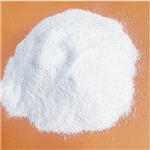
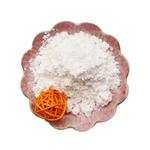
Chemical Properties
white powder
Uses
HEPES sodium salt solution is suitable for cell culture studies. It may be used in the preparation of buffer solution of HEPES. It may be used as buffer during the phosphorylation assays in permeabilized fibroblasts. It may be used to compose a complex dialysis buffer, used in the determination of free thyroxin in serum by radioimmunoassay.
Definition
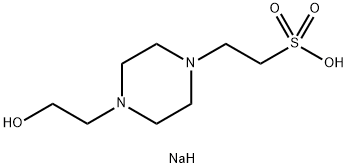
ChEBI: Sodium 2-[4-(2-hydroxyethyl)piperazin-1-yl]ethanesulfonate is an organic sodium salt, a N-(2-hydroxyethyl)piperazine and a N-(sulfoalkyl)piperazine. It contains a 2-[4-(2-hydroxyethyl)piperazin-1-yl]ethanesulfonate.
General Description
HEPES is a general-purpose zwitterionic buffer which does not bind magnesium, calcium, manganese(II) or copper(II) ions. HEPES has been classified as Good′s buffer by Dr. Norman Good and his colleagues in 1966. It is zwitterionic at biological pH and is most effective in the pH range of 6.8 to 8.2.
Flammability and Explosibility
Not classified
Biological Activity
Multi purpose buffer used in biological research.
Synthesis
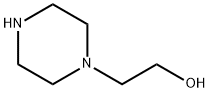
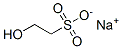
The general procedure for the synthesis of N-(2-hydroxyethyl)piperazine-N'-(2-ethanesulfonic acid) sodium salt from N-hydroxyethylpiperazine and sodium 2-hydroxyethanesulfonate is as follows: magnetic stirring in a 70-mL fluoropolymer-lined steel autoclave equipped with internal thermocouples for monitoring the temperature of the liquid phase, a pressure gauge, a pressure-reducing valve, and an exhaust valve. First, amine feedstock, anhydrous or aqueous sodium 2-hydroxyethanesulfonate solution, and anhydrous or aqueous sodium hydroxide solution were added to the open-topped autoclave. Subsequently, the autoclave was assembled and immersed in an electrically heated oil bath. The stirred reaction mixture was rapidly heated to the specified reaction temperature with the exhaust valve closed and maintained at that temperature for the time specified in Examples 9, 10 and 13. Upon completion of the reaction, the mixture was cooled to room temperature, the reactor was opened, and the reaction product was dissolved in a sufficient amount of water to ensure complete dissolution of all solids.
References
[1] Patent: US2006/89509, 2006, A1. Location in patent: Page/Page column 4-6