Uses
A monomer widely used in the production of polymers and copolymers for manufacturing textiles, latex paints, paper coatings, dirt release agents, and specialty plastics
Description
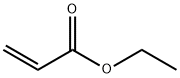
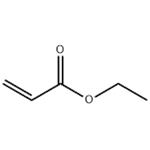
Ethyl acrylate is an organic compound with the formula CH
2CHCO
2CH
2CH
3. It is the ethyl ester of acrylic acid. It is a colourless liquid with a characteristic acrid odor. It is mainly produced for paints, textiles, and non-woven fibers . It is also a reagent in the synthesis of various pharmaceutical intermediates.
Chemical Properties
Ethyl acrylate has a characteristic penetrating and persistent odor. Ethyl acrylate is possibly carcinogenic to humans
(IARC, California Proposition 65)
Chemical Properties
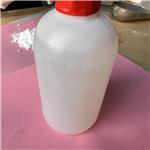
Ethyl acrylate is a colorless liquid. Sharp,
acrid odor. The Odor Threshold is 0.00024~0.0009 ppm. 1.5 % soluble in water, miscible with alcohol
and oils. Ethyl acrylate absorbs 1.5% water
in aqueous media. It polymerizes easily under
influence of air, heat or daylight. Fairly stable
below 10℃. The polymer form is a transparent, resilient, odorless mass.
Physical properties
Clear, colorless liquid with a penetrating and pungent odor. Leonardos et al. (1969) and Nagata
and Takeuchi (1990) reported odor threshold concentrations of 0.47 and 0.26 ppb
v, respectively.
Experimentally determined detection and recognition odor threshold concentrations were 1.0
μg/m
3 (0.24 ppb
v) and 1.5 μg/m
3 (0.37 ppb
v), respectively (Hellman and Small, 1974).
Occurrence
Reported found in pineapple, yellow passion fruit and durian (Durio zibethinus).
Uses
Monomer for acrylic resins.
Uses
Ethyl acrylate is used in the manufacture ofacrylic resins, acrylic fibers, textile and papercoatings, adhesives, and leather finish resins;and as a flavoring agent.
Uses
Ethyl Acrylate is a flavoring agent that is a clear, colorless liquid.
its odor is fruity, harsh, penetrating, and lachrymatous (causes tears).
it is sparingly soluble in water and miscible in alcohol and ether,
and is obtained by chemical synthesis.
Definition
ChEBI: Ethyl acrylate is an enoate ester.
Production Methods
Ethyl acrylate is manufactured via oxidation of propylene to
acrolein and then to acrylic acid. The acid is treated with
ethanol to yield the ethyl ester .
Vinyl chloride reacts at 270 °C at >6895 kPa (68 atm)
with ethanol in the presence of a cobalt and palladium
catalyst to give ethyl acrylate in a yield of 17% .
Preparation
By esterification of acrylic acid; by heating acetylene with HCl in alcoholic solution in the presence of Ni(CO)4; also from
ethyl-3-chloropropionate passed over activated carbon at high temperature.
Aroma threshold values
Detection: 0.2 ppb
General Description
A clear colorless liquid with an acrid odor. Flash point 60°F. May polymerize exothermically if heated or contaminated. If the polymerization takes place inside a container, the container may rupture violently. Auto ignition temperature 721°F (383°C) (NTP). Less dense than water. Vapors heavier than air. Used to make paints and plastics.
Air & Water Reactions
Highly flammable. Insoluble in water.
Reactivity Profile
A flammable liquid, confirmed carcinogen. Ethyl acrylate can react vigorously with oxidizing reagents, peroxides,strong alkalis and polymerization initiators. [NTP] Ethyl acrylate reacts violently with chlorosulfonic acid [Sax, 9th ed., 1996, p. 1515]. When an inhibited monomer was placed in a clear glass bottle exposed to sunlight, exothermic polymerization set in and caused the bottle to burst. The use of brown glass or metal containers and increase in inhibitor concentration (to 200 ppm; tenfold) was recommended [MCA Case History No. 1759]. Ethyl acrylate may polymerize when exposed to light and Ethyl acrylate is subject to slow hydrolysis. Inhibitors do not function in the absence of air. Solutions in DMSO are stable for 24 hours under normal lab conditions. [NTP].
Hazard
Toxic by ingestion, inhalation, skin absorption; irritant to skin and eyes. Flammable, dangerous fire and explosion hazard. Possible carcinogen.
Health Hazard
Ethyl acrylate is a strong irritant to the eyes,skin, and mucous membranes. The liquid orits concentrated solutions can produce skinsensitization upon contact. It is toxic by allroutes of exposure. The toxicity is low inrats and mice and moderate in rabbits. Thetoxic effects from inhalation noted in animalswere congestion of lungs and degenerativechanges in the heart, liver, and kidney. Mon key exposed to 272 ppm for 28 days showedlethargy and weight loss; while exposure to1024 ppm caused death to the animals after2.2 days (Treon et al. 1949). By compari son, guinea pigs died of exposure to about1200 ppm for 7 hours. Ingestion of the liq uid may result in irritation of gastrointestinaltracts, nausea, lethargy, and convulsions
The LD50 values varied significantly indifferent species of animals. The oral LD50values in rabbits, rats, and mice are in therange 400, 800, and 1800 mg/kg, respectively. Animals administered ethyl acrylateshowed increased incidence of tumors inforestomach. However, there is no evidenceof carcinogenicity caused by this compoundin humans.
Flammability and Explosibility
Flammable
Chemical Reactivity
Reactivity with Water No reaction; Reactivity with Common Materials: No reaction; Stability During Transport: Stable; Neutralizing Agents for Acids and Caustics: Not pertinent; Polymerization: May occur; exclude moisture, light; avoid exposure to high temperatures; store in presence of air; Inhibitor of Polymerization: 13-17 ppm monomethyl ether of hydroquinone.
Safety Profile
Confirmed carcinogen
with experimental carcinogenic data. Poison
by ingestion and inhalation. Moderately
toxic by skin contact and intraperitoneal
routes. Human systemic effects by
inhalation: eye, olfactory, and pulmonary
changes. A skin and eye irritant.
Characterized in its terminal stages by dyspnea, cyanosis, and convulsive
movements. It caused severe local irritation
of the gastroenteric tract; and toxic
degenerative changes of cardiac, hepatic,
renal, and splenic tissues were observed. It
gave no evidence of cumulative effects.
When applied to the intact skin of rabbits,
the ethyl ester caused marked local irritation,
erythema, edema, thickening, and vascular
damage. Animals subjected to a fairly high
concentration of these esters suffered
irritation of the mucous membranes of the
eyes, nose, and mouth as well as lethargy,
dpspnea, and convulsive movements. A
substance that migrates to food from
packagmg materials.
Flammable liquid. A very dangerous fire
hazard when exposed to heat or flame; can
react vigorously with oxidizing materials.
Violent reaction with chlorosulfonic acid.
To fight fire, use CO2, dry chemical, or
alcohol foam. When heated to
decomposition it emits acrid smoke and
irritating fumes. See also ESTERS.
Safety
It is an acute toxin with an LD50 (rats, oral) of 1020 mg / kg and a TLV of 5 ppm. The International Agency for Research on Cancer stated, "Overall evaluation, Ethyl acrylate is possibly carcinogenic to humans (Group 2B)." The United States Environmental Protection Agency (EPA) states, "Human studies on occupational exposure to ethyl acrylate... have suggested a relationship between exposure to the chemical(s) and colorectal cancer, but the evidence is conflicting and inconclusive. In a study by the National Toxicology Program (NTP), increased incidences of squamous cell papillomas and carcinomas of the fore stomach were observed in rats and mice exposed via gavage (experimentally placing the chemical in the stomach). However, the NTP recently determined that these data were not relevant to human carcinogenicity since humans do not have a fore stomach, and removed ethyl acrylate from its list of carcinogens." (Occupational exposure generally involves exposure that occurs regularly, over an extended period of time.)
One favorable safety aspect is that ethyl acrylate has good warning properties; the odor threshold is much lower than any level of health concern. In other words, the bad odor warns people of ethyl acrylate's presence long before the concentration reaches a level capable of creating a serious health risk.
Potential Exposure
This material is used in emulsion polymers for paints, textiles, adhesives, coatings and binders; as
a monomer in the manufacture of homopolymer and copolymer resins for the production of paints and plastic films
First aid
If this chemical gets into the eyes, remove anycontact lenses at once and irrigate immediately for at least15 min, occasionally lifting upper and lower lids. Seek medical attention immediately. If this chemical contacts theskin, remove contaminated clothing and wash immediatelywith soap and water. Seek medical attention immediately. Ifthis chemical has been inhaled, remove from exposure,begin rescue breathing (using universal precautions, including resuscitation mask) if breathing has stopped and CPR ifheart action has stopped. Transfer promptly to a medicalfacility. When this chemical has been swallowed, get medical attention. Give large quantities of water and inducevomiting. Do not make an unconscious person vomit.Medical observation is recommended for 24- 48 h afterbreathing overexposure, as pulmonary edema may bedelayed. As first aid for pulmonary edema, a doctor orauthorized paramedic may consider administering a corticosteroid spray
Carcinogenicity
A retrospective study found
an excess of colorectal cancers in one exposed population of
workers; however, the data were confounded by other exposures
and lack of association of causality and risk in similarly
exposed populations from other locations. Therefore, there
was inadequate evidence based on the study that ethyl acrylate
is a human carcinogen . Ethyl acrylate is listed as
USEPA group B2, “Probable human carcinogen”; IARC
group B2, “Possibly carcinogenic in humans”; NIOSH,
“Carcinogen with no further categorization”; NTP group 2,
“Reasonably anticipated to be a carcinogen” and listed as a
carcinogen by California Proposition 65 .
Dermal studies of acrylic acid, ethyl acrylate, and n-butyl
acrylate using mice did not result in local carcinogenesis,
but several mice in the ethyl acrylate-treated group did
exhibit dermatitis, dermal fibrosis, epidermal necrosis, and
hyperkeratosis .
Environmental Fate
Chemical/Physical. Polymerizes on standing and is catalyzed by heat, light, and peroxides
(Windholz et al., 1983). Slowly hydrolyzes in water forming ethanol and acrylic acid. The
reported rate constant for the reaction of ethyl acrylate with ozone in the gas phase was determined
to be 5.70 x 10
-18 cm
3 mol/sec (Munshi et al., 1989).
At an influent concentration of 1,015 mg/L, treatment with GAC resulted in an effluent
concentration of 226 mg/L. The adsorbability of the carbon used was 157 mg/g carbon (Guisti et
al., 1974).
storage
Color Code—Red: Flammability Hazard: Store ina flammable liquid storage area or approved cabinet awayfrom ignition sources and corrosive and reactive materials.Ethyl acrylate must be stored to avoid contact with oxidizers (such as peroxides, perchlorates, chlorates, nitrates, andpermanganates), strong alkalis (such as sodium hydroxideand potassium hydroxide) and moisture since violent reactions occur. Store in tightly closed containers in a cool,well-ventilated area away from heat. Heat can cause ethylacrylate to react by itself. If this takes place in a closed container, an explosion could occur. Ethyl acrylate usually contains an inhibitor, such as hydroquinone or its methyl ether,to prevent a self-reaction. If it does not contain an inhibitor,the reaction may occur without the application of heat.Sources of ignition, such as smoking and open flames, areprohibited where ethyl acrylate is handled, used, or stored.Metal containers involving the transfer of 5 gallons or moreof ethyl acrylate should be grounded and bonded. Drumsmust be equipped with self-closing valves, pressure vacuumbungs, and flame arresters. Use only nonsparking tools andequipment, especially when opening and closing containersof ethyl acrylate. Wherever ethyl acrylate is used, handled,manufactured, or stored, use explosion-proof electricalequipment and fittings
Shipping
UN1917 Ethyl acrylate, Hazard Class: 3; Labels:
3-Flammable liquid
Purification Methods
Wash the ester repeatedly with aqueous NaOH until free from inhibitors such as hydroquinone, then wash it with saturated aqueous CaCl2 and distil it under reduced pressure. Hydroquinone should be added if the ethyl acrylate is to be stored for extended periods. [Beilstein 2 IV 1460.] LACHRYMATORY.
Toxicity evaluation
The toxic mode of action for ethyl acrylate is unknown.
However, the parent compound may play a significant role
since pretreatment of rats with a carboxylesterase inhibitor
enhances the respiratory irritation and lethality produced by
the inhalation of ethyl acrylate. The enhanced toxicity could be
a direct effect of methyl acrylate on surrounding tissues and/or
a secondary effect due to the increased conjugation of methyl
acrylate with glutathione that occurs under these conditions
which in turn can result in toxicity due to the depletion of local
glutathione stores.
Incompatibilities
May form explosive mixture with air.
Atmospheric moisture and strong alkalies may cause fire
and explosions unless properly inhibited (Note: Inert gas
blanket not recommended). Heat, light or peroxides can
cause polymerization. Incompatible with oxidizers (may be
violent), peroxides, polymerizers, strong alkalis; moisture,
chlorosulfonic acid, strong acids; amines. May accumulate
static electrical charges, and may cause ignition of its vapors. Polymerizes readily unless an inhibitor, such as
hydroquinone is added. Uninhibited vapors may plug vents
by the formation of polymers.
Toxics Screening Level
The initial threshold screening level (ITSL) for Ethyl Acrylate is 120 μg/m3 based on an annual averaging time.
Waste Disposal
Incineration or by absorption and landfill disposal