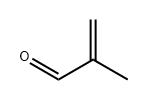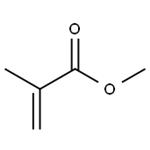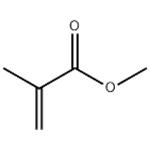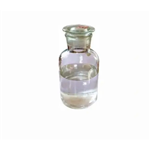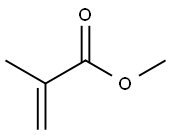
Methyl methacrylate
- Product NameMethyl methacrylate
- CAS80-62-6
- CBNumberCB8854425
- MFC5H8O2
- MW100.12
- EINECS201-297-1
- MDL NumberMFCD00008587
- MOL File80-62-6.mol
- MSDS FileSDS
Chemical Properties
| Melting point | -48 °C (lit.) |
| Boiling point | 100 °C (lit.) |
| Density | 0.936 g/mL at 25 °C (lit.) |
| vapor density | 3.5 (vs air) |
| vapor pressure | 29 mm Hg ( 20 °C) |
| FEMA | 4002 | METHYL 2-METHYL-2-PROPENOATE |
| refractive index | n |
| FLAVIS Number | 09.647 | Methyl methacrylate |
| Flash point | 50 °F |
| storage temp. | 2-8°C |
| solubility | 15g/l |
| form | Crystalline Powder or Crystals |
| color | White to pale yellow |
| Odor | at 0.10 % in dipropylene glycol. acrylic aromatic fruity |
| Odor Type | acrylate |
| biological source | synthetic |
| Odor Threshold | 0.21ppm |
| explosive limit | 2.1-12.5%(V) |
Safety
| Symbol(GHS) |
  
|
|||||||||
| Signal word | Danger | |||||||||
| Hazard statements | H315-H319-H361-H372-H317-H334-H335-H336-H412-H225 | |||||||||
| Precautionary statements | P501-P273-P272-P270-P202-P240-P260-P210-P233-P201-P243-P241-P242-P271-P264-P280-P284-P370+P378-P342+P311-P308+P313-P337+P313-P305+P351+P338-P362+P364-P303+P361+P353-P333+P313-P304+P340+P312-P403+P233-P403+P235-P405 | |||||||||
| Hazard Codes | F,Xi,T | |||||||||
| Risk Statements | 11-37/38-43-39/23/24/25-23/24/25 | |||||||||
| Safety Statements | 24-37-46-45-36/37-16-7 | |||||||||
| OEB | A | |||||||||
| OEL | TWA: 100 ppm (410 mg/m3) | |||||||||
| RIDADR | UN 1247 (METHYL METHACRYLATE MONOMER, STABILIZED) | |||||||||
| WGK Germany | 1 | |||||||||
| RTECS | OZ5075000 | |||||||||
| Autoignition Temperature | 815 °F | |||||||||
| TSCA | TSCA listed | |||||||||
| HazardClass | 3 | |||||||||
| PackingGroup | II | |||||||||
| HS Code | 29161410 | |||||||||
| Storage Class | 3 - Flammable liquids | |||||||||
| Hazard Classifications | Flam. Liq. 2 Skin Irrit. 2 Skin Sens. 1 STOT SE 3 | |||||||||
| Hazardous Substances Data | 80-62-6(Hazardous Substances Data) | |||||||||
| Toxicity | The acute toxicity of methyl methacrylate is low. Irritation of the skin, eye, and nasal cavity has been observed in rodents and rabbits exposed to relatively high concentrations of methyl methacrylate. The chemical is a mild skin sensitizer in animals. The effect observed most frequently at lowest concentration after repeated inhalation exposure to methyl methacrylate is irritation of the nasal cavity. Effects on the kidney and liver at higher concentrations have also been reported. | |||||||||
| IDLA | 1,000 ppm | |||||||||
| NFPA 704: |
|