Description
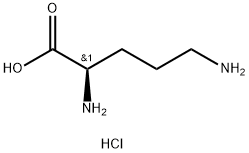
D-Ornithine monohydrochloride is the monohydrochloride form of D-Ornithine. D-ornithine is a non-proteinogenic amino acid involved in the urea cycle by the splitting off of urea from arginine. Ornithine supplementation can attenuate fatigue in increasing the efficiency of energy consumption and promoting the excretion of ammonia.
References
https://pubchem.ncbi.nlm.nih.gov/compound/D-ornithine
https://en.wikipedia.org/wiki/Ornithine
Chemical Properties
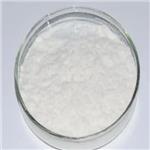
White to off-white crystalline powder
Uses
The D-enatiomer and putative metabolite of the non-essential amino acid L-Orthinine. Stress response studies show intracerebroventricular D-Ornithine Hydrochloride weakly attenuated stress response in neonatal chick under acute stressful condition.
Definition
ChEBI: D-Ornithine hydrochloride is an organic molecular entity.
Biochem/physiol Actions
D-Ornithine cleave proteins at cysteine residues.
Synthesis
Experimentally, DL-ornithine was obtained from L-arginine by one-pot hydrolysis-extinction reaction in alkaline solution, and then directly bioconverted by lysine decarboxylase from HafniaalveiAS1.1009, D-ornithine hydrochloride was prepared in 45.3% yield, and putrescine was also obtained in 41.5% yield. The reaction of L-arginine to DL-ornithine was catalyzed by salicylaldehyde at 0.10 molar ratio under reflux condition with 1.0 mol/L sodium hydroxide aqueous solution in 3 h. The results of the study on the properties of lysine decarboxylase in the bioconversion showed that the addition of 1 mmol/L Fe2+ could increase the specific enzyme activity to 6 119 U. Under the optimized conditions, the conversion time was 16 h, which was suitable for preparing D-ornithine hydrochloride and putrescine. -ornithine hydrochloride and putrescine.