Description
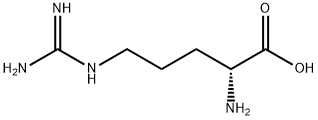
D-arginine is the D-form of arginine, which is a kind of amino acids. It can be reacted with hydrogen peroxide for non-enzymatic synthesis of nitric oxide. It has certain pharmacological activities. For example, its derivative, 1-deamino-8-D-arginine vasopressin is useful for the management of haemophilia and von Willebrand’s disease. It also has the potential to inhibit the proliferation of certain cancer cells. In biological research, D-arginine is frequently used in the studies of L-arginine/nitric oxide pathway as an inactive form of L-arginine.
Chemical Properties
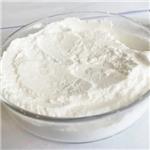
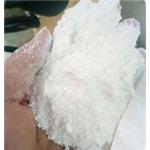
white to light yellow crystal powde
Uses
1-Deamino-8-D-arginine vasopressin makes a new pharmacological approach to the management of haemophilia and von Willebrand's disease. A novel nonenzymatic pathway for the generation of nitric oxide is by the reaction of hydrogen peroxide and d- or l-arginine.
Uses
Arginine is an essential amino acid found in food and plant sources, and many biological systems.
D-Arginine is extensively used in studies on L-arginine/nitric oxide pathway as an inactive form of L-arginine, even in man.
D-Arginine is slightly soluble (in water) and a moderately acidic compound (based on its pKa). D-Arginine can be found in human epidermis and platelet tissues. Within the cell, D-arginine is primarily located in the peroxisome. D-Arginine specifically can inhibit arginine decarboxylase enzymes and also functions as a metabolite.
Definition
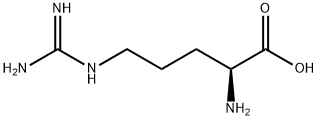
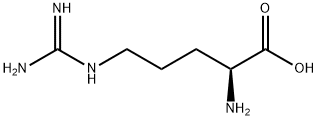
ChEBI: D-arginine is a D-alpha-amino acid that is the D-isomer of arginine. It has a role as an EC 4.1.1.19 (arginine decarboxylase) inhibitor and a mouse metabolite. It is a D-alpha-amino acid and an arginine. It is a conjugate base of a D-argininium(1+). It is a conjugate acid of a D-argininate. It is an enantiomer of a L-arginine.
in vivo
D-arginine (1 mg/kg, i.v., caudal veins, every two days) sensitize osteosarcoma to radiotherapy in a mouse model of subcutaneous osteosarcoma[3].
The number of D-arginine residues in cell-penetrating peptides (i.v.) significantly affects their cellular uptake behavior and systemic toxicity in mice[4].
D-Arginine (700 mg/kg, i.p.) displays central stimulant properties and increases spontaneous motor activity in mice[5].
D-arginine (i.p.) shows a light toxicity order (LD50: 2800 mg/kg) in mice[5].
D-arginine (1400 mg/kg, i.p.) protects against Pentylenetetrazole-induced convulsions in mice[5].
D-arginine (1000 mg/kg, p.o., 16 weeks) significantly alters various enzymes and metabolites in the arginine metabolic pathways in male SD rats[6].
D-arginine (1000 mg/kg, s.c., coadministered with L-arginine) blocks antinociception elicited by L-arginine (HY-N0455) in mice with Carrageenin-induced hyperalgesia[7].
D-arginine (20 mg/kg, s.c.) does not significantly alter the percentage of antinociception in mice[8].
| Animal Model: | Female BALB/c mice (anesthetized by intraperitoneal injection of 3% pentobarbital sodium; K7M2 cells were injected subcutaneously; X-ray irradiation)[2] |
| Dosage: | 1 mg/kg |
| Administration: | Intravenous injection (i.v.), caudal veins, every two days |
| Result: | Inhibited tumor volume (20 days).
|
IC 50
Human Endogenous Metabolite
References
https://www.alfa.com/zh-cn/catalog/A16137/
Iannucci, N. B., et al. "Antiproliferative effect of 1-deamino-8-D-arginine vasopressin analogs on human breast cancer cells." Future Medicinal Chemistry 3.16(2011):1987-1993.
Ripoll, Giselle, et al. "Angiostatic activity of 1-Deamino-8-D-Arginine vasopressin and novel peptide analogues in breast cancer cells." Cancer Research 68(2008).
Navarro, Eduardo, et al. "Toxicological and Pharmacological Effects of D-Arginine." Basic & Clinical Pharmacology & Toxicology97.3(2005):149-154.