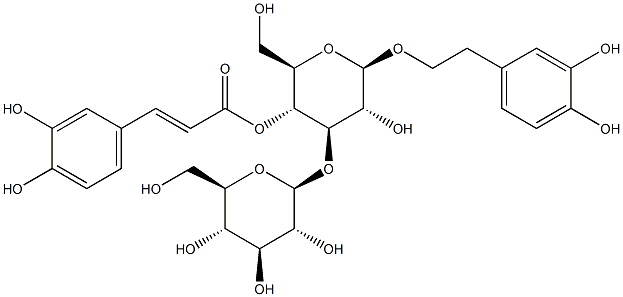
Plantamajoside (20-80 mg/kg) promotes the recovery of neurological function and protects the tissue structure of the spinal cord after ASCI in a rat model of acute spinal cord injury[15].
Plantamajoside (25-100 mg/kg, i.p., 24 h) alleviates acute sepsis-induced organ dysfunction through inhibiting the TRAF6/NF-κB axis in mice[16].
Plantamajoside (10-40 mg/kg, p.o., 4 weeks) has protective activities against Cd-induced renal injury in rats[17].
Plantamajoside (25-100 mg/kg, i.p., three times at 6, 12, 18 h) ameliorates lipopolysaccharide-induced acute lung injury via suppressing NF-κB and MAPK activation in mice[18].
Plantamajoside (20-80 mg/kg, i.p., once a day for 4 weeks) modulates immune dysregulation and hepatic lipid metabolism in rats with nonalcoholic fatty liver disease via AMPK/Nrf2 elevation[19].
| Animal Model: | Acute sepsis C57BL/6 male mice model by caecal ligation and perforation (CLP)[16] |
| Dosage: | 25, 50, 100 mg/kg |
| Administration: | Intraperitoneal injection (i.p.), 24 h |
| Result: | Extended survival in CLP model.
Improved acute sepsis-triggered organ damage.
Alleviated acute sepsis-triggered apoptosis.
Relieved acute sepsis-triggered inflammatory response.
Improved acute sepsis-triggered organ damage via mediating the TRAF6/NF-κB pathway.
Improved acute sepsis-triggered apoptosis and inflammation via regulating the TRAF6/NF-κB pathway.
|