Synthesis
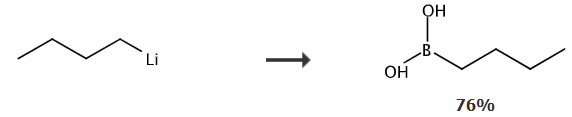
Method 1, Synthesis of n-Butylboronic acid: n-Butylboronic acid was prepared on a medium scale in a 10L reactor by adding BuLi to triisopropyl borate at a temperature of -42 to -50°C to obtain 197g (76%). Vmax was 6.5L (32.5L/kg).
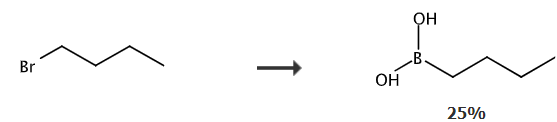
Method 2: In a 100mL single-necked round flat-bottom flask, add 10mmol of trisubstituted borate ester, 10mmol of bromobutane, 12mmol of magnesium powder, 50mL of tetrahydrofuran dried with potassium hydroxide, and a small amount of iodine. Attach a reflux condenser and subject the mixture to ultrasonic irradiation at different temperatures for 30min in an ultrasonic reactor. After the reaction is complete, adjust the reaction solution to be slightly acidic with 2mol/L hydrochloric acid. After stirring for a while, separate the organic layer, and a white precipitate will form. Extract the aqueous layer twice with 30mL of diethyl ether. Wash the combined organic layers with water, dry them, and remove the solvent by rotary evaporation to obtain the crude product. Purify the crude product by recrystallization with water. Analyze the obtained compound by IR and 1H NMR spectroscopy.
Chemical Properties
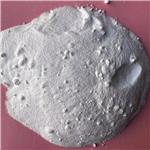
white to faintly beige shinying platelets
Uses
n-Butylboronic acid is a boronic acid derivative that can be used as a transport carriers in membrane-based sugar separations. n-Butylboronic acid is used as an analytical reagent in the determination of serum glucose.
Uses
n-Butylboronic acid can be used in suzuki reaction.
Uses
1-Butylboronic acid is used as a reagent for preparation of volatile derivatives of diols, e.g. carbohydrates, for GC and mass spectrometry and to prepare chiral oxazaborolidines. It is a precursor to unsymmetric borinic acids, which are inhibitors of serine proteases. Can be used as a transport carrier in membrane-based sugar separations and as an analytical reagent in the determination of serum glucose.
reaction suitability
reagent type: derivatization reagent
reaction type: Alkylations
Purification Methods
Butylboronic acid (1-butanedihydroxyborane) [4426-47-5] M 101.9, m 90 -92o, 94 -96o, pKEst ~8.8.acuo. [Corey et al. J Am Chem Soc 116 3151 1994, Quallich et al. J Am Chem Soc 116 8515 1994, Seerden Tetrahedron Lett 35 4419 1994, Beilstein 4 IV 4383.]