Description
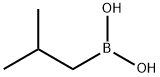
Isobutaneboronic acid is also known as isobutylboronic acid. Isobutaneboronic acid has been used to synthesize potent and selective dipeptidyl boronic acid proteasome inhibitors, which are promising therapeutics to treat cancer and inflammatory diseases.
1
Reference
J. Adams, M. Behnke, S. Chen, A. A. Cruickshank, L. R. Dick, L. Grenier, J. M. Klunder, Y. Ma, L. Plamondon, R. L. Stein, Potent and selective inhibitors of the proteasome: Dipeptidyl boronic acids, Bioorganic & Medicinal Chemistry Letters, 1998, vol. 8, pp. 333-338
Chemical Properties
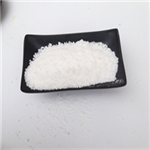
White to Almost white powder to crystal
Uses
2-Methylpropylboronic Acid is used in the preparation of isocoumarin analogs as inhibitors of γ-secretase cleavage. Also used in the preparation of peptide boronc acid.
Uses
(2-Methylpropyl)boronic acid can be used as:
A reactant in the preparation of 4-isobutylisoquinoline from 4-bromoisoquinoline by Suzuki-Miyaura type couple reaction.
A catalyst along with aluminum hydroxide, boric acid in the polymerization of styrene.
It can also be used as a reactant in:
Copper catalyzed cross-coupling reactions.
The synthesis of polyborylalkanes by Ir-catalyzed C-H borylation reaction.
The preparation of heterosubstituted diazaboroles and borinines.
Synthesis
In a 50 ml round-bottomed flask containing potassium 4-methoxyphenyltrifluoroborate (456 mg, 3.0 mmol) and silica gel (180 mg, 3.0 mmol), a volume of H2O (9 mL) was added rapidly under nitrogen. The reaction was stirred at room temperature until NMR indicated that the reaction was complete (about 1 h). The reaction mixture was filtered to remove silica gel and the filter cake was thoroughly rinsed with ethyl acetate to separate the aqueous and organic layers, and the aqueous layer was extracted with ethyl acetate (2 15 mL) (Table 2, electron-deficient arylboronic acid washed with brine). The combined organic layers were dried (MgSO4), filtered, concentrated, and vacuum dried overnight to provide the desired pure product in 83% yield (0.38 g, 2.49 mmol) as a white solid. The conventional operation was then continued using potassium isobutyl trifluoroborate and the reaction was completed within 1 hour. The desired pure product was obtained in 73% yield (0.24 g, 2.3 mmol) resulting in isobutylboronic acid as a white solid.