Chemical Properties
Crystalline Solid
Uses
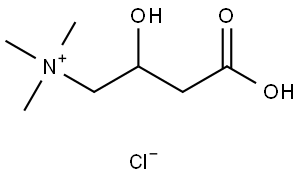
DL-Carnitine is a racemic mixture of the quaternary ammonium stereoisomers biologically active L-carnitine and biologically inactive D-carnitine. DL-Carnitine is used in comparative studies with the pure isomers.
Uses
Vitamin (enzyme cofactor). Essential cofactor of fatty acid metabolism; required for the transport of fatty acids through the inner mitochondrial membrane. Synthesized primarily in the liver and kidney; highest concentrations found in heart and skeletal muscle. Dietary sources include red meat, dairy products, beans, avocado.
brand name
Carni tor (Sigma-Tau).
Synthesis
DL-carnitine hydrochloride is synthesized starting from epichlorohydrin, which is converted with trimethylamine hydrochloride into the salt of 3-chloro-2-hydroxy-1-(trimethylamino)-propane to yield 4-(trimethylamino)-3-hydroxybutyronitrile chloride, followed by acid hydrolysis[1].

References
[1]
Yurkevich, A. M., Shevtsova, O. N., Chermenskaya, I. E., Chervyakova, G. S., Preobrazhenskii, N. A. (1968). Synthesis of vitamin BT (DL-carnitine hydrochloride). Pharmaceutical Chemistry Journal, 2(1), 24–26.
https://doi.org/10.1007/bf00761095