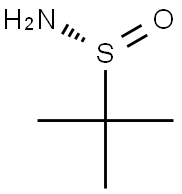
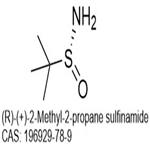
Chemical Properties
(R)-(+)-2-Methyl-2-propanesulfinamide is white to light yellow crystal powde
Uses
suzuki reaction, useful reagent for synthesizing chiral amines.
Uses
Chiral ligand used in pharmaceutical compositions
Uses
(R)-(+)-2-Methyl-2-propanesulfinamide is a chiral ligand, which is used in pharmaceutical compositions. Further, it is used in the preparation of beta-chloro sulfinamides in the synthesis of chiral azridines. It is involved in the preparation of organocatalyst for enantioselective reduction of imines. It serves as a reagent for synthesizing chiral amines. In addition to this, it is converted into P,N-sulfinyl imine ligands through condensation with aldehydes and ketones which undergoes iridium-catalyzed asymmetric hydrogenation of olefins.
Preparation
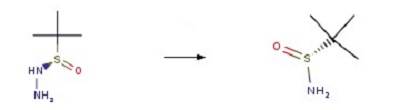
Acetic acid (70 g), R-tert-butylsulfinylhydrazine (42 g), zinc powder (60.5 g) and dichloromethane (150 mL) were added to the reaction flask. The temperature was slowly heated to 35-42 °C . After 16 hours, the filtrate was poured into 70 mL water. Dichloromethane (75 g×5) was added for extraction. Collected the organic phase, added 48% NaOH to adjust ρΗ (7-8). Then added NaCl, the layers were separated and the organic phase was washed with 15 g saturated aqueous solution of sodium chloride. The solution was dried over magnesium sulfate. After filterED, filtrate was concentrated under reduced pressure at 25-30 °C until no slipping. N-heptane was replaced, 28 g mixed solvent of N-heptane and toluene (N-heptane: toluene = 6:1) were added to perform beating at low temperature, filtered to obtain (R)-(+)-2-Methyl-2-propanesulfinamide. Yield=83%
Synthesis
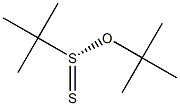
In step 3, 150 mL of cyclopentyl methyl ether (CPME) was added to the reaction flask and the temperature of the reaction system was controlled at -50 °C to -70 °C. Liquid ammonia (30.3 g, 1.78 mol) was slowly added dropwise followed by 2.5 M n-butyllithium (n-BuLi) solution 396 mL (0.99 mol). White solid formation was observed during the dropwise addition and the reaction was maintained at this temperature for 0.5 hr. Next, a mixed solution of (R)-tert-butyl thiobutyl tert-butyl tert-butyl tert-butyl sulfite (160.9 g, 0.83 mmol, 96.2% ee) and 2-chloropropane (86.4 g, 1.1 mmol) dissolved in cyclopentyl methyl ether was added dropwise (this solution was the reaction product of step 2). After the dropwise addition, the reaction was kept at a low temperature and continued to stir for 1 h. The completion of the reaction was monitored by TLC. At the end of the reaction, the reaction solution was concentrated under reduced pressure to remove the solvent, 1500 mL of methyl tert-butyl ether (MTBE) was added and filtered through diatomaceous earth. After the filtrate was concentrated under reduced pressure, 140 mL of cyclohexane was added, and the crystals were precipitated with stirring from -10 °C to 0 °C to obtain 79.5 g of white fine needle-like crystals of (R)-(+)-tert-butylsulfinamide in 79% yield. The product was analyzed by HPLC: purity 99.1%, enantiomeric excess value (ee) 99.8%.
References
[1] Qian X, et al. A stereoselective synthesis of (S)-2-(((3-fluoro-4-methylphenoxy)carbonyl)(1-(4-((5-methyl-2-phenyloxazol-4-yl)methoxy)phenyl)ethyl)amino)acetic acid, a highly potent PPAR α/γ dual agonist. Tetrahedron, 2015; 71: 9408-9414.