Chemical Properties
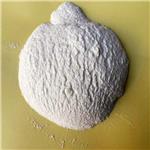
Pure product is white powdery solid, m.p.177.9~178.6℃, solubility in water at 20℃ is 1.6mg/L, partition coefficient is 4.1, pH value is 5~9 stable.
Uses
Thifluzamide is a fungicide found in cereals, vegetables and fruits; A succinate dehydrogenase inhibitor.
Definition
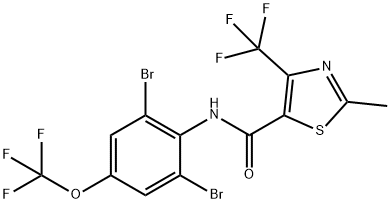
ChEBI: An aromatic amide obtained by formal condensation of the carboxy group of 2-methyl-4-(trifluoromethyl)thiazole-5-carboxylic acid with the amino group of 2,6-dibromo-4-(trifluoromethoxy)aniline. Used to control Rhizoctonia spp. diseases on rice
potatoes, maize, grass and other crops.
Production Methods
The industrial production of thifluzamide begins with the preparation of a substituted aniline derivative, which undergoes selective bromination and trifluoromethoxylation to form a highly halogenated aromatic intermediate. This is then coupled with a thiazolecarboxylic acid derivative via amide bond formation, yielding the final compound.
Mechanism of action
Systemic, absorbed by roots and translocated, inhibits succinate dehydrogenase in the tricarboxylic acid cycle