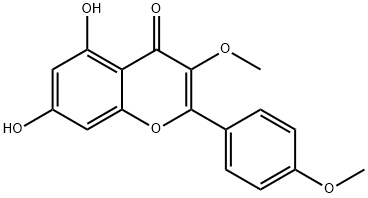
Definition
ChEBI: 3,4'-dimethylkaempferol is a dimethoxyflavone that is kaempferol in which the hydroxy groups at position 3 and 4' have been replaced by methoxy groups. It is a component of bee glue and isolated from several plant species including Tanacetum microphyllum. It has a role as an anti-inflammatory agent, an antimycobacterial drug, an apoptosis inducer, an antineoplastic agent and a plant metabolite. It is a dihydroxyflavone and a dimethoxyflavone. It is functionally related to a kaempferol.
References
[1] QIONG DING . The critical role of glutathione redox homeostasis towards oxidation in ermanin-induced melanogenesis[J]. Free Radical Biology and Medicine, 2021, 176: Pages 392-405. DOI:
10.1016/j.freeradbiomed.2021.09.017[2] JOSÉ ANTONIO GUERRA. Inhibition of inducible nitric oxide synthase and cyclooxygenase-2 expression by flavonoids isolated from Tanacetum microphyllum[J]. International immunopharmacology, 2006, 6 11: Pages 1723-1728. DOI:
10.1016/j.intimp.2006.08.012[3] NADINE DE MEYER. 4’-Hydroxy-3-methoxyflavones with potent antipicornavirus activity[J]. Journal of Medicinal Chemistry, 1991, 34 2: 736-746. DOI:
10.1021/jm00106a039