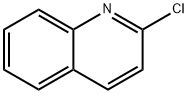
Chemical Properties
Yellow to yellow-brown crystalline powder
Uses
2-Chloroquinoline-3-carbaldehydes and their derivatives are recognized for their biological and pharmacological activities, including antimicrobial, anti-inflammatory, antimalarial, and antiviral properties. It serves as a precursor for Schiff base synthesis, reacting with 7-methyl-2-propyl-3H-benzoimidazole-5-carbohydrazide in ethanol/DMF at 50–55 °C followed by reflux at 85–90 °C to give the corresponding hydrazide Schiff base. Under Mg-Al hydrotalcite catalysis, 2-chloroquinoline-3-carbaldehyde reacts with nitromethane to afford threo (1S,2R)-1-(2-chloroquinoline-3-yl)-2-nitropropane-1-ol and 2-chloro-3-(2-nitrovinyl)quinoline[3-4].
Synthesis
Example 7 Synthesis of 2-chloro-3-quinolinecarboxaldehyde: 1.53 mL (3.30 mmol) of n-butyllithium (n-BuLi) was added slowly and dropwise to an 8 mL THF solution containing 0.46 mL (3.30 mmol) of diisopropylamine at 0 °C. After 20 minutes of reaction, the solution was cooled to -78 °C and 2-chloroquinoline (491 mg, 3.0 mmol) was added at this temperature. The mixture was stirred at -78 °C for 30 min, followed by dropwise addition of dimethylformamide (0.39 mL, 5.04 mmol) and continued stirring at the same temperature for 30 min. Upon completion of the reaction, the reaction was quenched with glacial acetic acid (1 mL) at -78 °C, then the mixture was slowly warmed to room temperature and diluted with ether (30 mL). The organic phase was washed sequentially with saturated NaHCO3 solution (10 mL) and brine (10 mL) and dried over anhydrous MgSO4. Concentration gave 2-chloro-3-quinolinecarboxaldehyde (530 mg, 92% yield) as a light yellow solid with melting point 145-149 °C, which could be used in the next reaction without further purification. By recrystallization from ethyl acetate, a pure product was obtained as pale yellow acicular crystals with a melting point of 149-150 °C (literature values 148-149 °C, see Meth-Cohn, O.; Narhe, B.; Tarnowski, B. J. Chem. Soc. Perkin Trans. I 1981, 1520).1H NMR (300 MHz, CDCl3) δ 10.57 (s, 1H), 8.77 (s, 1H), 8.08 (d, 1H, J = 9 Hz), 8.0 (d, 1H, J = 9 Hz), 7.90 (t, 1H, J = 9 Hz), 7.67 (t, 1H, J = 9 Hz); IR (nujol) 1685, 1575, 1045, 760, 745 cm-1. 745 cm-1.
References
[1] Patent: US5212317, 1993, A
[2] Patent: US5162532, 1992, A
[3]
Abdel-Wahab, B. F., Khidre, R. E. (2013). 2‐Chloroquinoline‐3‐carbaldehyde II: Synthesis, Reactions, and Applications. Journal of Chemistry, 2013(1).
https://doi.org/10.1155/2013/851297 [4]
Mallandur, B. K., Rangaiah, G., Harohally, N. V. (2017). Synthesis and antimicrobial activity of Schiff bases derived from 2-chloro quinoline-3-carbaldehyde and its derivatives incorporating 7-methyl-2-propyl-3
H -benzoimidazole-5-carboxylic acid hydrazide. Synthetic Communications, 47(11), 1065–1070.
https://doi.org/10.1080/00397911.2017.1309668