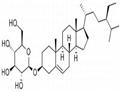
Uses
Daucosterol can be used as an efficient and inexpensive neuroprotectants, to which the IGF1-like activity of daucosterol contributes and it could be potentially developed as a medicine for ischemic stroke treatment. Moreover, daucosterol has neuroprotective activity, it has proliferation-enhancing activity of neural stem cells (NSCs), and it as an efficient and inexpensive growth factor alternative that could be potentially developed as a medicine for ischemic stroke treatment, can significantly reduce neuronal loss.
The study demonstrated that daucosterol works as an efficient and inexpensive growth factor alternative that could be used in clinical medicine and research applications.
Description
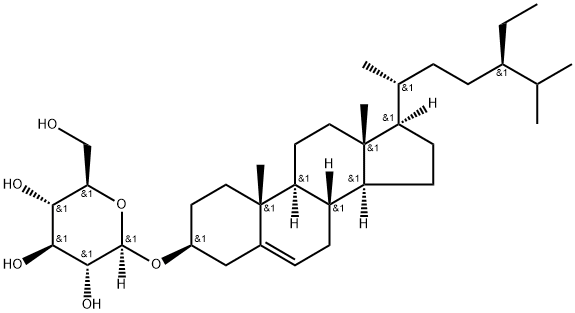
Daucosterol, alias: Citoside, β-Sitosterol β-D-glucoside, and the molecular formula is C35H6. The compound of the formula (description column) belongs to a carotene compound, which is present in mallow family plants, and figs and other plants also contain carotene. Daucosterol exhibits anti-tumor, anti-inflammatory and acaricidal activities, also moderate antibacterial activity against Bacillus subtilis and Staphylococcus aureus, and it has anti-cancer and apoptotic effects in human colon cancer cell line HCT-116.
Synthesis
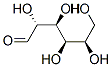
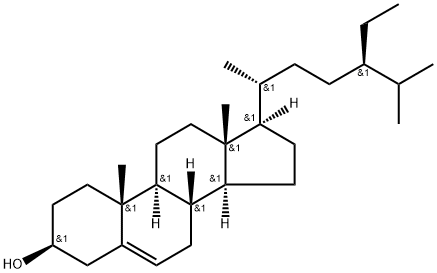
β-sitosterol (124.4 g, 0.3 mol) and D-glucose (18.0 g, 0.1 mol) were dissolved in ethylbenzene (600 mL). Trimethylsilyl trifluoromethanesulfonate (TMSOTf, 8.9 g, 7.3 mL, 40 mmol) was slowly added to the reaction system at 80 °C and the reaction was continued at a constant temperature until thin-layer chromatography (TLC) detection showed that the D-glucose was almost completely consumed (about 15 h). Upon completion of the reaction, the reaction solution was concentrated and subsequently separated by silica gel column chromatography using dichloromethane as eluent (silica gel particle size 100-200 mesh). The separation was monitored by TLC until β-sitosterol was no longer detected in the eluate, and the corresponding eluate was collected and concentrated to give the recovered β-sitosterol (83.0 g, 0.2 mol). The elution was continued with ethyl acetate as eluent and monitored by TLC until the target product (2R,3R,4S,5S,6R)-2-((3S,8S,9S,10R,13R,14S,17R)-17-((2R,5R)-5-ethyl-6-methylheptan-2-yl)-10,13-dimethyl-2,3, 4,7,8,9,10,11,12,13,14,15,16,17-tetradecahydro-1H-cyclopenta[a]phenanthren-3-yl)oxy)-6-(hydroxymethyl)tetrahydro-2H-pyran-3,4,5-triol. Concentration of the eluate containing the target product gave a white solid product (47.3 g) in 82% yield and 97.8% purity as determined by high performance liquid chromatography (HPLC).