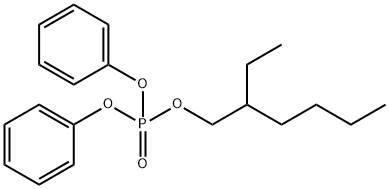
General Description
Pale yellow liquid. Insoluble in water.
Reactivity Profile
Organophosphates, such as 2-ETHYLHEXYL DIPHENYL PHOSPHATE(1241-94-7), are susceptible to formation of highly toxic and flammable phosphine gas in the presence of strong reducing agents such as hydrides. Partial oxidation by oxidizing agents may result in the release of toxic phosphorus oxides
Air & Water Reactions
Insoluble in water.
Health Hazard
ACUTE/CHRONIC HAZARDS: Toxic. Hazardous decomposition products. Experimental carcinogen.
Fire Hazard
Probably combustible.
Chemical Properties
Colorless, transparent liquid. Freezing point -60°C; boiling point 375°C, 239°C (1.33 kPa); relative density 1.080-1.090 (25°C); refractive index 1.506-1.512 (25°C). Miscible with common organic solvents, poorly soluble in water.
Uses
Pharmaceuticaid (plasticizer).
Definition
ChEBI: Octicizer is an aryl phosphate.
Toxicology
2-Ethylhexyl Diphenyl Phosphate has only a very low acute toxicity (LD50, oral, rat and rabbit, more than 24 000 mg/kg). No indications of carcinogenic effects were found in rats after two years of administration of the substance in the feed (up to 1%). 2-Ethylhexyl diphenyl phosphate was not genotoxic in the Ames test, the HGPRT test, and the in vivo chromosome aberration test in rats. No teratogenic effects were observed in rats, and development of the offspring was only impaired at maternally toxic doses.
Synthesis
Separately 76.5g (0.5mol) trichlorophosphorus (first trichlorophosphorus into the preheater preheating, preheating temperature of 50-60 ℃, preheating at the same time add Lewis acid 0.75 g (trichlorophosphorus weight of 1%), 94g (1mol) phenol,