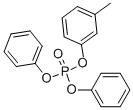
General Description
A clear transparent liquid with a very slight odor. Insoluble in water. Primary hazard is to the environment. Immediate steps should be taken to limit spread to the environment. Easily penetrates the soil to contaminate groundwater and nearby waterways.
Reactivity Profile
Organophosphates, such as CRESYL DIPHENYL PHOSPHATE, are susceptible to formation of highly toxic and flammable phosphine gas in the presence of strong reducing agents such as hydrides. Partial oxidation by oxidizing agents may result in the release of toxic phosphorus oxides.
Air & Water Reactions
Insoluble in water.
Health Hazard
Inhalation of material may be harmful. Contact may cause burns to skin and eyes. Inhalation of Asbestos dust may have a damaging effect on the lungs. Fire may produce irritating, corrosive and/or toxic gases. Some liquids produce vapors that may cause dizziness or suffocation. Runoff from fire control may cause pollution.
Fire Hazard
Some may burn but none ignite readily. Containers may explode when heated. Some may be transported hot.
Chemical Properties
Colorless, transparent liquid; very slight
odor.Insoluble
in water; soluble in most organic solvents except
glycerol. Combustible.
Synthesis
Pump 430 kg of m-p-cresol and 710 kg of molten phenol into the reaction kettle at one time, and add quantitative calcium and magnesium catalysts; when the material temperature (which can be stirred with a meeting) is less than 50 ℃ (stop stirring), pump 5
Purification Methods
Distil it in a vacuum, then percolate it through a column of alumina. Finally, pass it through a packed column maintained at 150o to remove traces of volatile impurities in a countercurrent stream of nitrogen under reduced pressure. [Dobry & Keller J Phys Chem 61 1448 1947, Beilstein 6 IV 2130.]