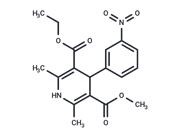
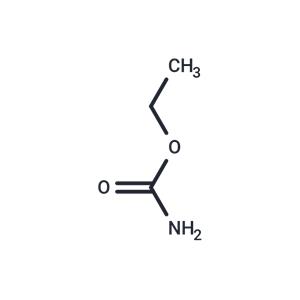
| Name | Urethane |
| Description | Urethane (Ethyl carbamate; Ethylurethane) is a byproduct formed during the fermentation process of various foods. As an ethyl ester of carbamic acid, it has the ability to inhibit the growth of bacteria, sea urchin eggs, protozoa, and plant tissues, and is commonly used for establishing lung cancer models. |
| In vitro | urethane has a spectrum of action on ion channels, which is distinct from other anesthetics. It significantly potentiates the current responses of both GABAA and glycine receptors in a reversible and concentration-dependent manner. Conversely, urethane (10–300 mM) inhibits the responses of NMDA and AMPA receptors. Also, urethane potentiates the function of an nACh receptor and neuronal nicotinic acetylcholine, γ-aminobutyric acid A, and glycine receptors[3]. |
| In vivo | Urethane, a carcinogenic substance, is favored for acute in vivo electrophysiological experiments because it induces long-lasting steady level of anesthesia with muscle relaxation and minimally affects the autonomic and cardiovascular systems[2]. Urethane affects both inhibitory and excitatory systems but the magnitude of the alterations is less than that produced by other more selective anesthetics[3]. But also, Urethane anesthesia is usually restricted to terminal (acute) experiments due to its potential long-term toxicity[1]. |
| Storage | Pure form: -20°C for 3 years | In solvent: -80°C for 1 year
Shipping with blue ice/Shipping at ambient temperature. |
| Solubility Information | DMSO : 55 mg/mL (617.35 mM), Sonication is recommended.
10% DMSO+40% PEG300+5% Tween 80+45% Saline : 2 mg/mL (22.45 mM), Sonication is recommended.
|
| Keywords | α4β2 nAChR | Urethane | Pesticide | Parasite | NMDA receptor | narcosis | mutagen | Inhibitor | inhibit | Glycine receptor | GABAReceptor | GABAR | GABA Receptor | clastogen | Chloridechannel | Chloride channel | carbamic | Bacterial | AMPA | acid |
| Inhibitors Related | Neomycin sulfate | D(+)-Raffinose pentahydrate | Sulfamethoxazole sodium | Terbinafine hydrochloride | Hydroxychloroquine | 2-Amino-2-methyl-1-propanol | Fenpyroximate | Hyaluronic acid sodium (MW 20 kDa) | N,N-Dicyclohexylcarbodiimide | Dimethyl sulfoxide | Sodium diacetate | Sodium bicarbonate |
| Related Compound Libraries | Anti-Tumor Natural Product Library | FDA-Approved & Pharmacopeia Drug Library | Anti-Parasitic Compound Library | Bioactive Compound Library | Approved Drug Library | Drug Repurposing Compound Library | Tobacco Monomer Library | Microbial Natural Product Library | NO PAINS Compound Library | Bioactive Compounds Library Max | Food as Medicine Compound Library | Anti-Cancer Active Compound Library |


 United States