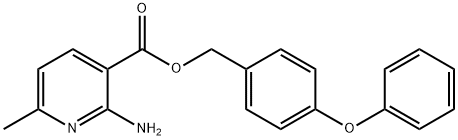
Aminopyrifen is produced through a modular heterocycle-assembly route characteristic of modern pyridazinone-based herbicides. Commercial manufacture begins with construction of the substituted pyridazinone core, typically formed by condensing a di-carbonyl precursor with an appropriate hydrazine derivative under conditions that tightly control ring closure and prevent over reaction of the sensitive heterocycle. In parallel, the fluorinated and chlorinated aromatic fragment that defines aminopyrifen’s herbicidal profile is prepared using established halogenation and nucleophilic-substitution chemistry chosen to preserve the integrity of the heteroaromatic ring. These two advanced intermediates are then joined through a selective coupling step, often an amide-forming or heteroaryl-aryl bond forming reaction, to assemble the full aminopyrifen scaffold without degrading the halogenated moieties.