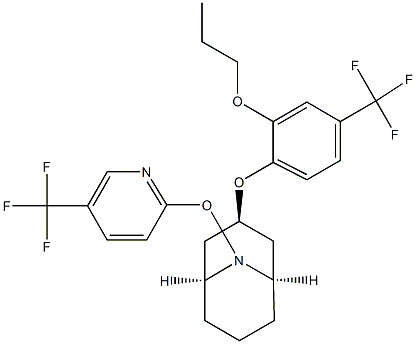
Acynonapyr is an insecticide used to selectively control spider mite. Little has currently been published regarding its environmental fate and behaviour. Acynonapyr is toxic to fish. It is not highly toxic to mammals either via ingestion or in contact with the skin. It is reported to have developmental effects and may be a liver and kidney toxicant.
Acynonapyr is used in pesticidal compositions.
Acynonapyr is manufactured through an industrial process that brings together its pyridazinone core and the heavily substituted aryl side chain using a modular route designed to control regioselectivity and halogen based impurities. Production typically starts with building the pyridazinone scaffold from an appropriately substituted diester or diketone, followed by cyclisation and activation, often via chlorination, to make the heterocycle receptive to nucleophilic substitution. In a parallel stream, the fluorinated aromatic fragment is prepared through controlled halogenation and functionalisation to generate a suitably reactive electrophile. The key assembly step is coupling this activated aryl intermediate with the pyridazinone nucleus under anhydrous, base-mediated conditions that suppress over-alkylation and rearrangements.
Acts on inhibitory glutamate receptors and disrupts neurotransmission. Calcium-activated potassium channel (KCa2) modulator.