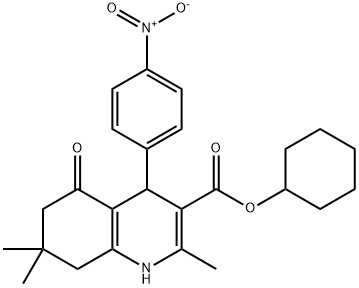
FLI-06 (313967-18-9) was discovered in a screen designed to monitor the trafficking and processing of a ligand-independent Notch-enhanced GFP reporter. It was found to disrupt the Golgi apparatus in a manner distinct from that of brefeldin A. It inhibited general secretion at a step before exit from the ER which was accompanied by a tubule-to-sheet morphological transition of the ER. Thus FLI-06 is the first small molecule acting at such an early stage in secretory traffic.1
The dihydropyridine FLI-06 is a Notch pathway inhibitor with an EC50 of 2.5 mM. Signaling through Notch transmembrane receptor proteins plays an important role in cell-fate decisions; aberrant Notch activity can result in cancer and other developmental disorders. FLI-06 acts at an early stage in the secretory pathway, disrupting the Golgi and inhibiting general secretion before exit from the endoplasmic reticulum. Studies show that FLI-06 suppresses both the mRNA and protein expression of Notch receptor and Notch targeted genes. FLI-06 treatment of tongue cancer cells inhibits Notch signaling activation, decreasing cell proliferation, blocking cell cycle arrest, and inducing apoptosis. FLI-06 inhibited tumor growth and increased cell apoptosis in a xenograft mouse model, suggesting that FLI-06 is a potential chemotherapeutic agent for the clinical treatment of tongue tumors. Additional studies showed that FLI-06 inactivated Notch signaling and suppressed malignant functions in lung adenocarcinoma and esophageal squamous cell carcinoma.