Hydrazine dihydrochloride
- Product NameHydrazine dihydrochloride
- CAS5341-61-7
- MFCl2H6N2
- MW104.97
- EINECS226-283-2
- MOL File5341-61-7.mol
Chemical Properties
| Melting point | 200 °C (dec.)(lit.) |
| Boiling point | 200 °C |
| Density | 1.42 g/mL at 25 °C(lit.) |
| bulk density | 770kg/m3 |
| Flash point | 200°C |
| storage temp. | Store below +30°C. |
| solubility | water: soluble(lit.) |
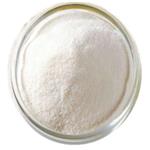
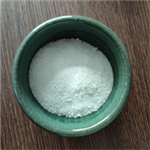
| form | white orthorhombic crystals |
| Specific Gravity | 1.42 |
| color | White crystalline |
| PH | 0.5 (50g/l, H2O, 20℃) |
| Odor | Odorless |
| Water Solubility | SOLUBLE |
| Merck | 14,4770 |
| Stability | Stable. Incompatible with most common metals, organic materials, strong bases, strong oxidizing agents. |
| InChI | 1S/2ClH.H4N2/c;;1-2/h2*1H;1-2H2 |
| InChIKey | LIAWOTKNAVAKCX-UHFFFAOYSA-N |
| SMILES | Cl[H].Cl[H].NN |
Safety Information
| Hazard Codes | T,N |
| Risk Statements | 45-23/24/25-43-50/53 |
| Safety Statements | 53-45-60-61 |
| RIDADR | UN 2811 6.1/PG 3 |
| WGK Germany | 3 |
| RTECS | MV2298000 |
| F | 3-10-21 |
| TSCA | TSCA listed |
| HS Code | 2825 10 00 |
| HazardClass | 6.1 |
| PackingGroup | II |
| Storage Class | 6.1C - Combustible acute toxic Cat.3 toxic compounds or compounds which causing chronic effects |
| Hazard Classifications | Acute Tox. 3 Dermal Acute Tox. 3 Inhalation Acute Tox. 3 Oral Aquatic Acute 1 Aquatic Chronic 1 Carc. 1B Skin Sens. 1 |
| Toxicity | LD50 orally in Rabbit: 129 mg/kg LD50 dermal Rabbit 91 mg/kg |