soluble in water, ethanol and methanol
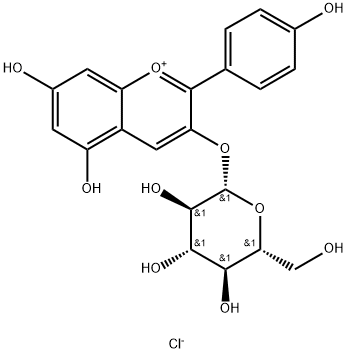
Pelargonidin 3-O-β-glucopyranoside is a naturally occurring anthocyanin found in strawberries and other fruits and flowers. Pelargonidin 3-O-β-glucopyranoside is known to exert potential antiinflammatory, anti-adhesive, anti-estrogenic, and angiotensin-converting enzyme inhibitory activities. Pelargonidin 3-Glucoside is also the glucoside of Pelargonidin (P218500), an potential antidiabetic agent.
ChEBI: Pelargonidin 3-O-beta-D-glucoside chloride is a member of the class of anthocyanin chlorides that has pelargonidin 3-O-beta-D-glucoside as the cationic counterpart. It contains a pelargonidin 3-O-beta-D-glucoside.
This substance is supplied with certified chromatographic purity. The exact value can be found on the certificate. Produced by PhytoLab GmbH & Co. KG
Callistephin chloride is an anthocyanin which can be found in berries, for example in strawberries and chokeberries. Is has antioxidant activity and is examined for its neuroprotective properties.
Kaempferol-3-(6-O-acetyl)glucoside (9.75 mg, 0.020 mmol) and Zn powder (164 mg) were dried under vacuum and they were accommodated in the reactor. Subsequently, Ar gas was introduced into the reactor and an Ar atmosphere was made inside the reactor. A 3.5% HCl-anhydrous methanol solution (1.2 ml) was added under ultrasonic irradiation at 0 C. Ultrasonic irradiation and strong stirring were carried out for 7 min, and then the reaction mixture was filtered under dry conditions to remove the Zn powder to obtain the filtrate. The above filtrate was contacted with dry air at room temperature while stirring vigorously to react for 3.5 h. The color of the reaction mixture changed from light red to dark red. The reaction mixture was poured into water (30 ml). It was poured into a column (inner diameter 1.5 cm, height 17 cm) filled with "AmberliteXAD-7 gel" (replaced with 0.5% TFA aqueous solution) to adsorb the dye molecules onto the column. Subsequently, the column was washed with 0.5% TFA aqueous solution (250 ml). Then, 90% aqueous acetonitrile solution containing 0.5% TFA was added to elute the adsorbed dye in the column. The pigment grade was refined by preparative separation ODS-HPLC. HPLC analysis using the ODS column resulted in a pigment fraction containing two anthocyanins. The pigment fraction obtained was concentrated to dryness at 40C under reduced pressure. 5.8 mg of geranoside-3-(6-O-acetyl)glucoside (50% yield) and 5.4 mg of geraniol-3 glucoside (50% yield) were obtained. Geraniumin-3-glucoside was prepared by salting geraniumin-3-glucoside chloride with hydrochloric acid. The purity of the pigment grade fraction of any pigment is not less than 95%.
Estrogen receptor | Immunology & Inflammation related | Progestogen receptor