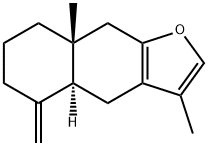
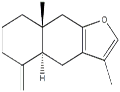
Yellow liquid, soluble in organic solvents such as methanol, ethanol, DMSO, etc., derived from Atractylodes macrocephala and Atractylodes lancea.
Atractylone (Atractylon) is a sesquiterpenoid extracted from Atractylodis Rhizoma. Atractylone (Atractylon) alleviates influenza A virus (IAV)-induced lung injury via regulating the TLR7 signaling pathway, and acts as a promising agent for IAV treatment. Atractylone (Atractylon) inhibits the degranulation of mast cell and exhibits potential for the treatment of mast cell-mediated allergic reactions[1][2].
ChEBI: Atractylone is a sesquiterpenoid.
Atractylon is a main active component of Atractylodis Rhizoma th at exhibits antibacterial, antiviral, anti-inflammatory, anti-allergic, anticancer, gastroprotective and neuroprotective activities. Atractylon inhibits proliferation, induces apoptosis and blocks invasion in varies hepatic cancer cell lines. It inhibits the expression of Bcl-2 and promotes the expression of Bax.
IL Receptor | VEGFR | Histamine Receptor
[1] Cheng Y, et al. Antiviral activities of atractylon from Atractylodis Rhizoma. Mol Med Rep. 2016 Oct;14(4):3704-10. DOI:
10.3892/mmr.2016.5713[2] Han NR, et al. Inhibitory effects of atractylone on mast cell-mediated allergic reactions. Chem Biol Interact. 2016 Oct 25;258:59-68. DOI:
10.1016/j.cbi.2016.08.015