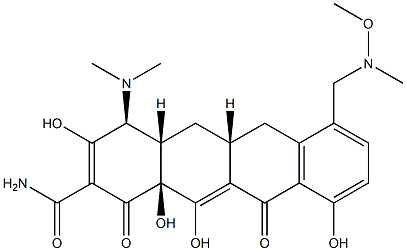
Sarecycline hydrochloride (0.33-9 mg/kg; i.v.) show potent activity against S. aureus in a murine neutropenic thigh infection model[1].
Sarecycline can inhibit S. aureus (PD50=0.25 mg/kg), but has no significant effect on E. coli even at the highest dose (>40 mg/kg) in CD-1 mice model of systemic (intraperitoneal) infection[6].
Sarecycline (1-150mg/kg; Intraperitoneal injection; Single dose) shows anti-inflammatory activity in Sprague Dawley rats model[6].
| Animal Model: | Carrageenan-induced footpad edema male Sprague Dawley rats model[6] |
| Dosage: | 1 mg/kg, 5 mg/kg ,10 mg/kg, 25 mg/kg, 50 mg/kg, 75 mg/kg,100 mg/kg, 150 mg/kg |
| Administration: | Intraperitoneal injection (i.p.); Single dose. Before a subplantar injection of sterile 1 mg/0.1 mL carrageenan solution in the right hind paw. |
| Result: | Reduced inflammation to 55.7% and 53.1%, respectively, at doses of 75 mg/kg and 100 mg/kg compared to baseline. |
| Animal Model: | Carrageenan-induced footpad edema male Sprague Dawley rats model[6] |
| Dosage: | 0.33, 1, 3, or 9mg/kg |
| Administration: | Intravenously |
| Result: | Achieved a 2-log10 reduction in the bacterial burden in the thigh at a dose comparable to that of doxycycline, with ED50s of 8.23 and 8.32mg/kg, respectively. |