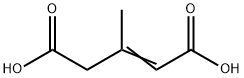
3-Methylglutaconic acid is a glutarate which builds up in the urine in 3-methylglutaconic aciduria. 3-methylglutaconic aciduria is a term used to describe five different disorders that impair the functioning of energy-producing centers within cells (mitochondria)
ChEBI: A dicarboxylic acid comprising (E)-glutaconic acid carrying a 3-methyl substituent.
3-Methylglutaconic acid is a metabolite (as the CoA thioester) in the leucine degradative pathway as well as the mevalonate shunt, a pathway th at links isoprenoid metabolism with mitochondrial acetyl-CoA metabolism. 3-Methylglutaconic acid accumulates in patients with a deficiency of 3-methylglutaconyl-CoA hydratase.
| Animal Model: | Male Sprague-Dawley rats and male Hartley guinea-pigs[2] |
| Dosage: | 0.16 mL/kg, 90 min |
| Administration: | Intraperitoneal injection (i.p.) |
| Result: | Increased initial blood pressure and heart rate in rats followed by vagal bradycardia and hypotension (rat)
Developed three patterns of cardiovascular changes (Type 1: a period of sympathetically-mediated hypertension and tachycardia followed by vagal bradycardia; Type 2: Increased arterial pressure and heart rate, but no vagal activation; Type 3: exhibited no significant cardiovascular changes(Guinea-pigs).
|
| Animal Model: | Male Wistar rats[3] |
| Dosage: | 45mg/kg for single dose, 4days |
| Administration: | Intraperitoneal injection (i.p.) |
| Result: | Decreased in NR2B expression on the whole cerebellum tissue and Purkinje cells.
|