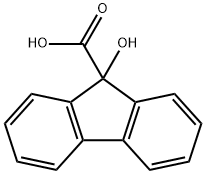
Flurenol is a post-emergence plant growth regulator, often used in conjunction with phenoxy herbicides, to assist in the control of broadleaved weeds. It has a moderate water solubility and a low volatility. It is not usually persistent in soils or waterbodies. Very little data is available for human health but flurenol has a low oral mammalian toxicity. Limited toxicity data is available for biodiversity but data that is available is low to moderate.
9-Hydroxy-9-fluorenecarboxylic acid was used in the synthesis of a hexameric organooxotin prismane.
ChEBI: Flurecol is a member of fluorenes.
Flurenol is commercially produced as a plant growth regulator through esterification of fluorene-9-carboxylic acid. The process begins with the synthesis of 9-hydroxyfluorene-9-carboxylic acid, which is then reacted with butanol in the presence of an acid catalyst to form the butyl ester - flurenol. This esterification is typically carried out under reflux conditions in an organic solvent to ensure complete conversion and high yield.
Systemic, synergist, absorbed by leaves and roots. Morphactins PGRs modify growth and development and delay senescence. They work by acting on the position of morphogenesis, which is the process of forming and maintaining the shape of a plant. These compounds inhibit the addition of sieve tubes that are essential for cell division and stem elongation. They are involved in modulating senescence of organs in plants and play a role in plant pathogen resistance.
Plant Growth Regulator; Herbicide