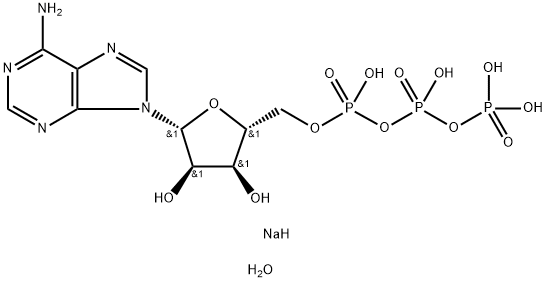
ATP, disodium salt, is used for the luminometric determination of Luc activity in cell extracts.
P2 purinergic agonist; increases activity of Ca2+-activated K+ channels; substrate for ATP-dependent enzyme systems
The product contains disodium salt crystals of ATP.
Adenosine 5μ-triphosphate (ATP) is a key energy currency, with high phosphate transfer potential, in all living organisms. ATP participates in several biological processes such as membrane transport, muscle contraction and synthesis, and degradation of biological molecules. It serves as an intracellular and extracellular signaling molecule in certain cellular processes such as cell motility, organ development, neurotransmission, and insulin secretion. Adenosine 5μ-triphosphate (ATP) acts as a substrate for proteins of the kinesin superfamily.
ATP disodium trihydrate (50 mg/kg; i.p.) protects mice against bacterial infection in vivo[4].
ATP disodium trihydrate induces the secretion of IL-1β, KC and MIP-2 and neutrophils recruitment in vivo[4].
| Animal Model: | Four-week-old Kunming mice (18-22 g)[4] |
| Dosage: | 50 mg/kg |
| Administration: | Intraperitoneal injection, before bacterial (E. coli) challenge |
| Result: | Protected mice from bacterial infection. |
Human Endogenous Metabolite