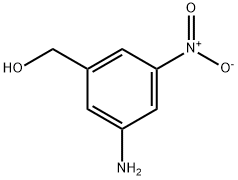
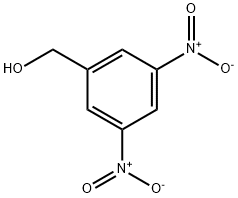
(ii) Synthesis of 3-amino-5-nitrobenzyl alcohol: 3,5-dinitrobenzyl alcohol (129.1 g, 0.65 mol) from step (i) was dissolved in methanol (1500 mL) and heated to reflux. Ammonium sulfide solution (450 mL, containing 20 wt% H2O, 442.9 g, 1.30 mol) was added slowly over 45 min. The resulting non-homogeneous mixture was refluxed for 2 hours, followed by stirring at 25 °C for 18 hours. Upon completion of the reaction, the mixture was filtered through a diatomaceous earth pad and the filtrate was acidified with 2N hydrochloric acid and the methanol was evaporated under reduced pressure. The remaining acidic aqueous solution was washed with ether (3×) and then alkalized with 6N sodium hydroxide solution. The alkalized aqueous solution was extracted with ether (4×). The organic phases were combined, dried with anhydrous sodium sulfate, filtered and concentrated under reduced pressure to give 95.8 g (88% yield) of 3-amino-5-nitrobenzenemethanol as an orange solid, which could be used in the next reaction without further purification. The product was characterized by 1H NMR (300 MHz, CD3OD): δ 7.46 (m, 1H), 7.38 (m, 1H), 6.98 (m, 1H), 4.57 (s, 2H).
[1] Tetrahedron Letters, 2003, vol. 44, # 29, p. 5477 - 5481
[2] Chinese Chemical Letters, 2011, vol. 22, # 7, p. 785 - 788
[3] Journal of Medicinal Chemistry, 1984, vol. 27, # 9, p. 1111 - 1118
[4] Bioorganic and medicinal chemistry letters, 2002, vol. 12, # 22, p. 3263 - 3265
[5] Journal of Labelled Compounds and Radiopharmaceuticals, 2002, vol. 45, # 3, p. 257 - 268