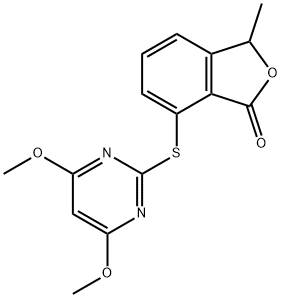
Pyriftalid is a rice herbicide. It has a low aqueous solubility and is semi-volatile. Whilst data is sparse it indicates that the chemical is not persistent in soil systems. It has a low mammalian toxicity and has a high potential for bioaccumulation. It is moderately toxic to birds, fish and honeybees. However, it poses a more serious risk to aquatic invertebrates.
Pyriftalid is a pesticide.
ChEBI: Pyriftalid is a member of 2-benzofurans.
Pyriftalid is synthesised through a five-step process that begins with 3-nitrophthalic acid as the starting material. A key innovation in its production is the direct substitution of a nitro group with a mercapto group, using sodium sulphide and elemental sulphur, which eliminates the need for hazardous catalytic reduction and diazotization steps. This transformation forms a crucial intermediate that is then reacted with 4,6-dimethoxy-1H-pyrimidine-2-thione to build the herbicidal core.
Pyriftalid is a pyrimidinyloxybenzoic herbicide used for the control of grass weeds in rice. Its mode of action involves inhibiting the biosynthesis of amino acids in weeds.
Taken up mainly by roots. Inhibits plant amino acid synthesis - acetohydroxyacid synthase AHAS.