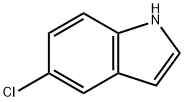
2 eq of pinacol diboronate, 2.5 eq of potassium fluoride, 3 mL of ethanol, and 0.2 mmol of 2-nitro5-chlorocinnamic acid were added to a pressure-resistant reaction tube containing 3 mL of methanol. After purging with nitrogen, the reaction was stirred in an oil bath at 100 °C for 12 h. The reaction was monitored by TLC and GC to determine the specific reaction time. The mixture was then cooled to room temperature, and ethyl acetate was added and thoroughly mixed. The mixture was diluted with ethyl acetate, filtered, and washed with ethyl acetate. The concentrated organic phases were combined and eluented with petroleum ether:ethyl acetate = 50:1. The product was obtained by column chromatography in 78% yield.
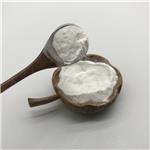
White to slightly greyish-green crystalline powder
5-Chloroindole has been used in the synthesis of 5-chloro-3-indole-N,N- dimethylglyoxalamide and 5-chloro-N,N-dimethyltryptamine. It may be used in the synthesis of dyestuffs in the presence of biocatalysts. 5-Chloroindole can be synthesized by using 3-chlorobenzaldehyde as starting reagent
5-Chloroindole is a halo-substituted indole used in the preparation of neurologically active compounds such as atypical antipsychotic agents. 5-Chloroindole has been shown to depress serotonin levels
in the brainstem and telencephalon.
5-Chloroindole is a 5-substituted indole. It undergoes electropolymerization to form a redox-active film consisting of a cyclic trimer and chains of linked cyclic trimer (polymer). It is a potential positive allosteric modulator (PAM) of the 5-HT3 receptor. It has been reported as strong inhibitor of the copper dissolution in acidic sodium chloride solution. It has been tested as corrosion inhibitor of mild steel in 1N deaerated sulphuric acid. Synthesis of 5-chloroindole, via nitration of indoline has been described.
It is distilled at high vacuum and recrystallises from pet ether (b 40-60o) or (b 80-100o) as glistening plates. The picrate has m 147o (146.5-147.5o)(from *C6H6). [Rydon & Tweddle J Chem Soc 3499 1955, Sugasawa J Org Chem 44 578 1979, Beilstein 20/4 V 34.]