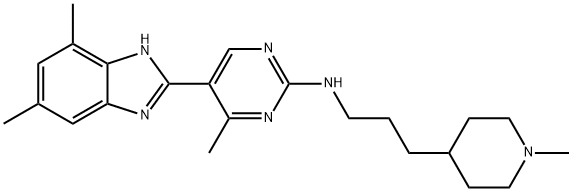
The animals treated with 100 mg/kg toreforant have reduced disease severity scores. The reduction in scores is similar to JNJ 28307474. A model of histamine-induced scratching in CD-1 mice (n=5 per group) is used to judge the anti-pruritic effects of Toreforant. Unlike other H4R antagonists, Toreforant is not efficacious in reducing histamine-mediated pruritus. After oral administration to rats, Toreforant-derived radioactivity is widely distributed into tissues; however, it is not quantifiable in cerebellum, cerebrum, medulla, and spinal cord in either Long Evans or Sprague Dawley rats, suggesting that drug-derived radioactivity does not cross the blood-brain barrier. Neuropathic pain models in rats are conducted with Toreforant and an H4R antagonist that does cross the blood-brain barrier, JNJ 39758979. In a rat spinal nerve ligation model JNJ 39758979 was able to significantly attenuate the mechanical allodynia induced in the model, however Toreforant has no activity[1].