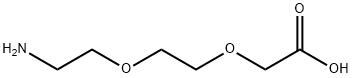
In a 2L three-necked flask equipped with a mechanical stirrer and a constant-pressure dropping funnel, diethylene glycolamine (100g, 1.0eq) and tetrahydrofuran (500mL, 5.0v/w) were added sequentially, and the temperature was lowered to 0–5℃. Then, 500mL of a tetrahydrofuran-diluted Boc₂O solution (207.58g, 1.0eq) was added dropwise. The temperature was raised to 10–20℃ and the reaction was carried out for 10 hours. IPC analysis indicated the reaction was complete. After cooling to 0–5℃, sodium tert-butoxide (91.40g, 1.0eq) was added in portions. After the addition was complete, the mixture was kept at this temperature and stirred for 1 hour. Then, sodium chloroacetate (143.46g, 1.3eq) was added dropwise. After the addition was complete, the temperature was raised to 10–20℃ and the reaction was carried out for 5 hours. IPC analysis indicated the reaction was complete.
The reaction was completed by pH testing; the mixture was concentrated under reduced pressure at 40–45 °C to remove tetrahydrofuran; concentrated hydrochloric acid (475.56 g, 5.0 eq) was added, and the mixture was stirred at 10–20 °C for 3 hours. The reaction was then completed by IPC testing. The pH was adjusted to 6–7 with 40% NaOH solution, and the mixture was extracted with a large amount of tetrahydrofuran. The organic phase was evaporated to dryness and then distilled with ethanol to remove water. The mixture was recrystallized with 300 mL of ethanol; the mixture was filtered, and the filter cake was dried under vacuum at 35 °C to obtain 95.1 g of 2-(2-(2-aminoethoxy)ethoxy)acetic acid, with a total yield of 61.3%.