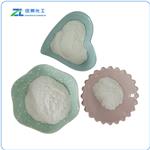
white to off-white powder
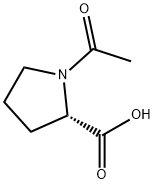
N-Acetyl-L-proline is an aminoacid used in the synthesis of pharmaceutical compounds useful in preventing and treating disorders and syndromes associated with the nervous, vascular, musculoskeletal, o
r cutaneous systems.
ChEBI: N-acetyl-L-proline is a N-acetyl-L-amino acid, a N-acylpyrrolidine, a pyrrolidinemonocarboxylic acid and a L-proline derivative.
N-acetyl-L-proline is an analog of the COOH-terminal dipeptide portion of preferred substrates of angiotensin-converting enzyme (ACE). It may be used in studies of the binding of substrates and inhibitors by ACE and to differentiate the specificities of various aminoacylases.
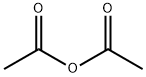
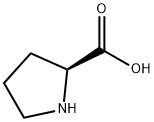
General procedure for the synthesis of N-acetyl-L-proline from L-proline and ethanoic anhydride: 115.1 mg (1 mmol) of L-proline was dissolved in an appropriate amount of methanol, followed by the addition of 0.3 ml (ca. 3 mmol) of ethanoic anhydride and 0.5 ml (ca. 3 mmol) of N,N-diisopropylethylamine (DIEA) to the reaction system. The reaction mixture was refluxed at 70°C for 7 hours. Upon completion of the reaction, methanol was removed by distillation under reduced pressure and unreacted ethanoic anhydride was removed by freeze-drying. Finally, purification was carried out using high performance liquid chromatography (HPLC) (mobile phase methanol:water = 45:65 with 0.05% formic acid, detection wavelength 214 nm) to give a white solid product in 84.2% yield.
[1] Jingxuan Qiu. “Solubility Behavior and Polymorphism of N-Acetyl-l-proline in 16 Individual Solvents from 283.15 to 323.15 K.” Journal of Chemical & Engineering Data 66 3 (2021): 1533–1542.
N-Acetyl-L-proline (NALP) is an N-acetyl derivative of L-proline, which has wide application in medicine and is commonly utilized as a biologically active supplement. It can also act as an intermediate for synthesizing pharmaceuticals for preventing and treating some disorders and syndromes associated with the nervous, vascular, musculoskeletal, or cutaneous systems. In laboratories, it could play the role of a simple model for the secondary structure of proline-containing peptides. NALP can be acetylated from L-proline via a standard method, in the environment of acetic acid, or by the action of acetic anhydride on aqueous solutions of the products of the alkaline hydrolysis of gelatin followed by extraction. However, these methods may result in the production of many byproducts[1].