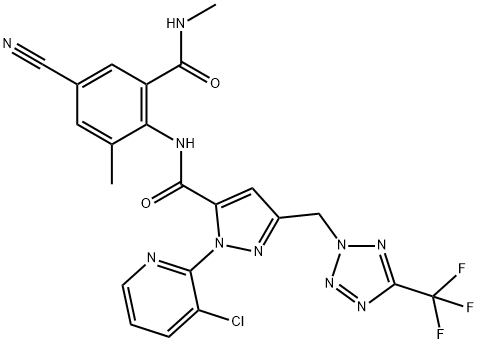
Tetraniliprole is used for the preparation of meta-diamide compounds and used for controlling invertebrate pests.
ChEBI: Tetraniliprole is a carboxamide that is cyantraniliprole in which the bromine atom has been replaced by a [5-(trifluoromethyl)-2H-tetrazol-2-yl]methyl group. It has a role as a ryanodine receptor agonist. It is a nitrile, an organochlorine compound, a pyrazole insecticide, a member of pyridines, a member of tetrazoles, an organofluorine compound and a secondary carboxamide.
Tetraniliprole is assembled through the multi-fragment construction strategy that defines modern anthranilic-diamide insecticides. Commercial manufacture begins with preparation of the halogenated anthranilic acid core, built through controlled halogenation and amide forming steps. In parallel, producers construct the substituted heterocyclic moiety, a thioether-linked, nitrogen-rich ring system, using established heterocycle-building and sulphur-substitution chemistry. These pre formed fragments are then joined via an activated acyl-coupling step, after which the crude product is purified, solvent-stripped, and crystalliz=sed to yield technical grade tetraniliprole.
Acts by ingestion. It interferes with the ryanodine-sensitive calcium release channels which lead to loss of muscle control and subsequent insect immobility. Ryanodine receptor modulator.