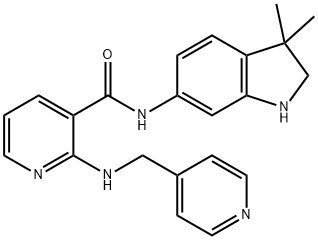
Motesanib (100 mg/kg) significantly inhibits VEGF-induced vascular permeability in a time-dependent manner. Oral administration of Motesanib twice daily or once daily potently inhibits, in a dose-dependent manner, VEGF-induced angiogenesis using the rat corneal model with ED50 of 2.1 mg/kg and 4.9 mg/kg, respectively. Motesanib induces a dose-dependent tumor regression of established A431 xenografts by selectively targeting neovascularization in tumor cells[1]. Motesanib in combination with radiation displays significant anti-tumor activity in head and neck squamous cell carcinoma (HNSCC) xenograft models[2]. Motesanib treatment also induces significant dose-dependent reductions in tumor growth and blood vessel density of MCF-7, MDA-MB-231, or Cal-51 xenografts, which can be markedly enhanced when combined with docetaxel or tamoxifen[3].