Uses
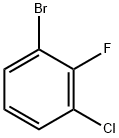
1-Bromo-3-chloro-2-fluorobenzene is lithiated with n-butyllithium in THF at −78 °C to form (3-chloro-2-fluorophenyl)lithium, which is then reacted with tert-butyl 2-oxopyrrolidine-, 2-oxopiperidine- and 2-oxoazepane-1-carboxylates to give the corresponding pyrrolidine, piperidine and azepane carbamates, and serves as the aryl lithium source for building piperidine-containing compounds[1]. Under palladium catalysis with (Ph3P)2PdCl2, 1-bromo-3-chloro-2-fluorobenzene couples with (furan-2-yl)tributyltin in DMF at 80 °C under argon to give 2-(3-chloro-2-fluorophenyl)furan[2].
References
[1]
Li, M., Gan, X., Liu, K., Rajeswaran, W. G., Stanczyk, M. A., Stewart, H. C., Rech, J. C., White, A. D., Traynor, J. R. (2024). Structure–Activity Relationships and Molecular Pharmacology of Positive Allosteric Modulators of the Mu-Opioid Receptor. ACS Chemical Neuroscience, 16(1), 16–29.
https://doi.org/10.1021/acschemneuro.4c00541 [2]
Read, M. L., Gundersen, L.-L. (2013). Synthesis of Phenanthridine Derivatives by Microwave-Mediated Cyclization of
o -Furyl(allylamino)arenes. The Journal of Organic Chemistry, 78(3), 1311–1316.
https://doi.org/10.1021/jo3027033