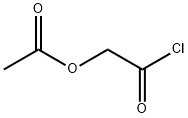
Description
Acetoxyacetyl chloride acylates 2-aminofluorene in benzene/pyridine to give N-(acetoxyacetyl)-2-aminofluorene, and reacts with N-hydroxy-2-aminofluorene in ether/water in the presence of NaHCO3 at 0 °C to give N-hydroxy-N-(acetoxyacetyl)-2-aminofluorene[1]. It also acylates the amine released by zinc/acetic acid cleavage of the Troc groups in a tetrasaccharide intermediate, giving the acetoxyacetamide in 77% yield over two steps[2].
References
[1]
Corbett, M. D., Corbett, B. R. (1988). N-Glycolylhydroxamic acids: an improved synthetic method and the in situ generation and intramolecular rearrangement of N-acetoxy-N-glycolyl-2-aminofluorene. Chemical Research in Toxicology, 1(4), 222–227.
https://doi.org/10.1021/tx00004a006 [2]
Tamai, H., Ando, H., Ishida, H., Kiso, M. (2012). First Synthesis of a Pentasaccharide Moiety of Ganglioside GAA-7 Containing Unusually Modified Sialic Acids through the Use of
N-Troc-sialic Acid Derivative as a Key Unit. Organic Letters, 14(24), 6342–6345.
https://doi.org/10.1021/ol303122w