Chemical Properties
clear colorless to yellow liquid
Uses
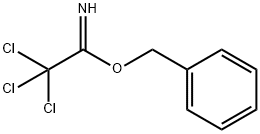
Benzyl 2,2,2-trichloroacetimidate was used as reagent during the synthesis of funiculosin dimethyl ether and (
S)-3-(benzyloxy)-2-methylpropanal. It was used in the acid-catalyzed benzylation of hydroxy groups.
Uses
Benzyl 2,2,2-trichloroacetimidate is used for the acid-catalyzed benzylation of hydroxy groups. It acts as reagent during the synthesis of funiculosin dimethyl ether and (S)-3-(benzyloxy)-2-methylpropanal. It can also be used for mild esterification of carboxylic acids in the presence of a catalytic amount of BF3 etherate.
Uses
Benzyl 2,2,2-trichloroacetimidate is used for the acid-catalyzed benzylation of hydroxy groups.
Synthesis
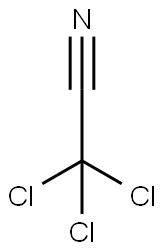
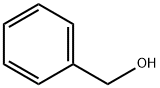
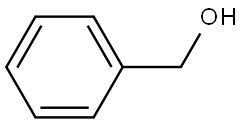
DBU (1,8-diazabicyclo[5.4.0]undec-7-ene) (1.24 mL, 8.31 mmol) was slowly added dropwise to a solution of dichloromethane (86 mL) containing benzyl alcohol (8.60 mL, 83.11 mmol) and trichloroacetonitrile (41.66 mL, 415.57 mmol), and the reaction mixture was cooled under ice bath conditions to 0 °C . Subsequently, the mixture was gradually warmed up to room temperature reaction. The progress of the reaction was monitored by thin layer chromatography (TLC) (petroleum ether/ethyl acetate, 95:5, V/V) until the formation of trichloroacetimide was observed. After 3 h of reaction, the solvent was removed by distillation under reduced pressure and the resulting residue was purified by silica gel column chromatography (eluent: petroleum ether/ethyl acetate, 95:5, V/V), followed by distillation at 80 °C/0.3 mbar to afford the target product 2,2,2-trichloroacetimidobenzyl ester as a colorless oil in 94% yield.TLC Rf value: 0.27 (petroleum ether/ethyl acetate. 95:5, V/V).1H NMR (400.13 MHz, CDCl3) δ (ppm): 5.26 (s, 2H, H1'); 7.24-7.36 (m, 5H, HPh); 8.31 (wide s, 1H, =NH).13C NMR (100.62 MHz, CDCl3) δ (ppm): 70.7 (Cl'); 91.3 (C2); 127.7, 128.3 and 128.5 (5C, CPh); 134.4 (C2'); 162.5 (C1).
Purification Methods
Purify the imidate by distillation to remove up to 1% of PhCH2OH as stabiliser. A solution in hexane can be stored for up to 2 months without decomposition. It is hygroscopic and has to be stored dry. [Wessel et al. J Chem Soc, Perkin Trans 1 2247 1985, Beilstein 6 IV 2265.]
References
[1] Tetrahedron Letters, 1996, vol. 37, # 9, p. 1481 - 1484
[2] Tetrahedron Letters, 2009, vol. 50, # 21, p. 2533 - 2535
[3] Bioorganic and Medicinal Chemistry Letters, 2016, vol. 26, # 2, p. 636 - 639
[4] Patent: US6348478, 2002, B1. Location in patent: Page column 32-33
[5] Journal of Organic Chemistry, 2003, vol. 68, # 19, p. 7234 - 7242