Chemical Properties
clear colorless to light yellow-orange liquid
Uses
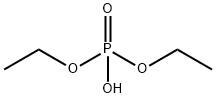
Phosphoric acid diethyl ester is an organophosphate that is usually found in pesticides and is known to induce changes in male hormone profile by decreasing serum testosterone and inhibin B levels. Phosphoric acid diethyl ester is also known to negatively affect the health of women and newborns living in agricultural communities.
Definition
ChEBI: A dialkyl phosphate having ethyl as the alkyl group.
in vivo
Diethyl phosphate (oral gavage; 0.08-0.8 mg/kg; 24 weeks) can lead to the disturbance of endocrine hormones and related metabolic indexes in rats[1].
Diethyl phosphate (oral gavage; 0.08-0.13 mg/kg; 20 weeks) affects the intestinal microbiota, serum hormones and pro-inflammatory cytokines[2].
| Animal Model: | Adult male Wistar rats aged 7-8 weeks old (344.4 ± 21.0 g)[1] |
| Dosage: | 0.08 or 0.8 mg/kg |
| Administration: | Oral gavage (i.g.); 24 weeks |
| Result: | Did not affect the body weight of rats and food intake.
Significantly decreased serum levels of TC, TG and LDL-C in rats.
Resulted in a decrease in sperm concentration, while the sperm abnormality rate increased, did not affect the sperm morphology in rats.
Increased the serum levels of FSH and estradiol, while the serum levels of LH and testosterone decreased.
Could cause thyroid-related hormone disorders in the serum of rats, causing symptoms of hyperthyroidism in rats, and could also lead to abnormal expression of thyroid hormone-related genes in the rat liver. |
| Animal Model: | Male Wistar rats aged 7 weeks old[2] |
| Dosage: | 0.08 or 0.13 mg/kg |
| Administration: | Oral gavage (i.g.); 20 weeks |
| Result: | Significantly enriched opportunistic pathogens, including Paraprevotella, Parabacteroides, Alloprevotella, and Helicobacter, leading to a decrease in IL-6.
Enriched the butyrate-producing genera, Alloprevotella and Intestinimonas, leading to an increase in estradiol and a resulting decrease in total triglycerides (TGs) and low-density lipoprotein cholesterol (LDL-C) in high dose group.
Induced increases in peptide tyrosine-tyrosine (PYY) and ghrelin. |