Description
5-Chlorouracil (5-CU) may have advantages for the inhibition of undesired fibroblast proliferation taking place after surgery for glaucoma and results in filtration failure. A comparison of 5-CU and 5-fluorouracil (5-FU) cytotoxicity shows that 5-CU is approximately 1000 times less toxic to nonproliferative cells while maintaining good antimitotic activity. In addition, 5-CU induces apoptotic-controlled cell death, whereas the influence of 5-FU is by apoptonecrosis. The 5-CU apoptotic mechanism is driven mainly by the nuclear translocation of AIF and activation of the LEI/L-DNase II pathways, which are caspase-independent. In conclusion, even though 5-CU is a weaker antiproliferating agent than 5-FU, its reduced toxic side effects on the epithelium and sclera allow for its enhanced efficacy and extended reduction of IOP after filtering surgery for glaucoma. 5-CU is an effective mutagen, clastogen and toxicant, and an effective inducer of sister-chromatid exchange, and is not as sensitive to ionizing radiation as other thymine analogues[1].
Chemical Properties
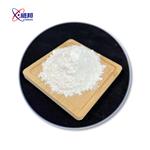
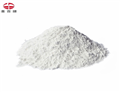
white to light beige crystalline powder
Uses
5-Chlorouracil was used as a control in resazurin-based cytotoxicity assay for screening of cytotoxicity in hepatocytes and liver cell lines.
Uses
5-Chlorouracil can be used for the experimental and clinical treatment of neoplastic and viral diseases.
Definition
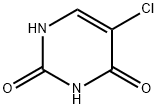
ChEBI: An organochlorine compound consisting of uracil having an chloro substituent at the 5-position. It is functionally related to a uracil.
General Description
The shape resonance spectra of 5-chlorouracil, obtained from fixed-nuclei elastic scattering calculations by the Schwinger multichannel method with pseudopotentials, was studied.
Synthesis
5-Chlorouracil is produced from uracil by myeloperoxidase-generated HOCl or activated macrophages, and can also be synthesized quantitatively by reacting uracil with reagent HOCl under strongly acidic to mildly basic conditions or with N-chloramines[2][3].
Purification Methods
It recrystallises from hot H2O (4g/500mL) using charcoal. [McOmie et al. J Chem Soc 3478 1955, West & Barrett J Am Chem Soc 76 3146 1954, Beilstein 24 III/IV 1231.]
References
[1] Marianne Berdugo Polak. “Controlled delivery of 5-chlorouracil using poly(ortho esters) in filtering surgery for glaucoma.” Investigative ophthalmology & visual science (2008): 2993–3003.
[2] Henderson, J. P., Byun, J., Takeshita, J., & Heinecke, J. W. (2003). Phagocytes Produce 5-Chlorouracil and 5-Bromouracil, Two Mutagenic Products of Myeloperoxidase, in Human Inflammatory Tissue. Journal of Biological Chemistry, 278(26), 23522–23528.
https://doi.org/10.1074/jbc.m303928200[3] Takeshita, J., Byun, J., Nhan, T. Q., Pritchard, D. K., Pennathur, S., Schwartz, S. M., Chait, A., & Heinecke, J. W. (2006). Myeloperoxidase generates 5-chlorouracil in human atherosclerotic tissue: a potential pathway for somatic mutagenesis by macrophages. The Journal of Biological Chemistry, 281 6, 3096–3104.
https://doi.org/10.1074/jbc.M509236200